Muscle: how much protein should be in a meal?
On this page
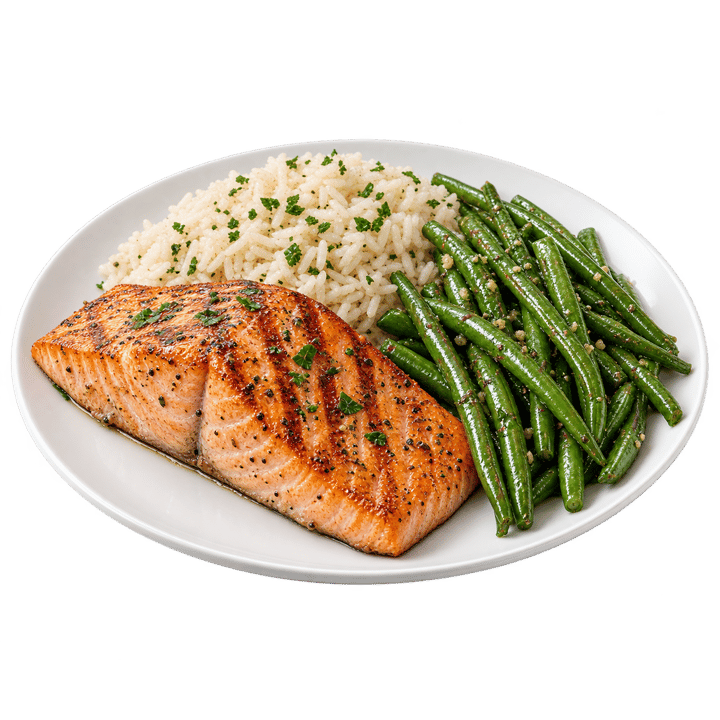
A typical range is 1.2 to 1.6 g of protein per kg of body weight a day, split across your meals. For a 170 lb person eating three times a day, that’s about 30 to 40 g a plate, which is about a palm of chicken or fish. That’s the Muscle meter, and a plate that misses it can’t be an A.
People tend to think of protein as a gym thing, or as one number for the whole day. Most eat it lopsided, with a little at breakfast, some at lunch and a big pile at dinner. A team of muscle researchers described the typical breakfast as “carbohydrate rich and low in protein”, and on the checker the usual breakfasts still come up short.
What we’d do
Put a clear protein on every plate, and start with breakfast, since that’s the one that misses. Aim for your share of the typical range, which is 30 to 40 g a plate for a 170 lb person eating three times a day. Under 1.2 g per kg a day is too low. Going over at one meal is fine, because your body keeps using a big protein meal for hours. These are typical ranges, and the Gyroscope app personalizes yours.
If you remember three things
- About a palm a plate. A palm of chicken breast (3 oz) has about 27 g of protein. A 170 lb adult eating three meals needs about 30 to 40 g a plate.
- Breakfast is where the gap is. A bowl of corn flakes and milk has 11 g. Three eggs, a cup of Greek yogurt and some strawberries have 36.
- Short on protein means no A. A lentil plate can clear the other five meters and still top out at B+ because it’s a few grams short.
Why put protein on every plate?
The 2025 to 2030 US guidelines put it as a heading: “Prioritize Protein Foods at Every Meal”. They set the day at 1.2 to 1.6 g per kg of body weight. At 170 lb (77 kg) that’s about 95 to 125 g a day, or about 30 to 40 g on each of three plates.
The first reason to spread it out is muscle. Your muscles are always being broken down and rebuilt, and the protein from a meal is what rebuilds them. In a 2014 study, 8 adults ate the same protein for a week two ways, about 30 g at each meal, or about 11 g at breakfast, 16 g at lunch and 63 g at dinner. Muscle building over 24 hours was 25% higher with the even split, and it stayed that way after a week.
The second reason is hunger. In a 2015 trial, 57 young adults who usually skipped breakfast got a 35 g protein breakfast, a 13 g one, or nothing, for 12 weeks. The skippers gained about 3.5 lb (1.6 kg) of fat. The high protein group gained none, ate less over the day and felt less hungry. That’s why protein counts toward the Hunger meter too.
A simple way to picture it
Picture a crew rebuilding a wall all day, with bricks delivered at each meal. If the morning delivery is a handful and the evening one is a truckload, the crew spends the morning short of bricks. Delivering about the same amount each time keeps them working.
The picture stops being true in one place. The evening truckload doesn’t just get dumped, since the body keeps using a big protein meal for many hours, which is why eating more at dinner is fine. The gap at breakfast is the part to fix.

How the Muscle meter works
The checker’s Muscle meter compares the plate’s protein with your share of the day’s typical range. Your share of 1.2 g per kg a day is the line, and a plate scores 80 there. Your share of 1.6 g per kg is the top, and a plate scores 100 there. Under the line it falls in a straight line toward zero, so a plate with half your share scores 40. For a 170 lb person eating three times a day, the line is 30 g and the top is 40 g, each rounded to the nearest 5.
Muscle is also the meter that keeps a lot of good plates from an A. Every one of the six has to clear its line for an A, so a plate that’s short on protein tops out at B+ however good the rest is. Here’s a plate most people would call perfect: a cup of lentils, two cups of spinach, a tomato, a little plain yogurt and a spoon of olive oil. It clears Energy, Processing, Hunger, Nutrients and Glucose easily, and it has 27 g of protein, a few grams under the line.


Lentils, spinach, tomato and yogurt
1 cup lentils, 2 cups spinach, 1 tomato, ½ cup yogurt, plain nonfat, 1 tbsp olive oil
450 calories, 27 g protein, 18.6 g fiber
- Energylight450 cal
- Processingwhole100% whole food
- Musclelow27 g protein
- Hungerfilling18.6 g fiber, 0.9 cal a gram
- Nutrientsdense3 cups of plants
- Glucosesteady0 g fast carbs
The one changeAdd a cup of plain Greek yogurt and it's A+


Tofu stir fry with brown rice
2 palms tofu, 1 cup brown rice, 1 cup broccoli, ½ cup bell pepper, 1 tbsp soy sauce, 1 tbsp olive oil
540 calories, 26 g protein, 10.1 g fiber
- Energyfits540 cal
- Processingwhole100% whole food
- Musclelow26 g protein
- Hungerfilling10.1 g fiber, 0.9 cal a gram
- Nutrientsdense1½ cups of plants
- Glucosesteady42 g fast carbs
The one changeAdd half a cup of black beans and it's A
Both plates are B+ for the same reason, and both fix it the way the answer on how vegetarians get enough protein in a meal says, with a second protein food on the plate. High protein meals has 18 plates that reach the line and clear the other five too.
How Gyroscope frames Muscle
In the Gyroscope app, Muscle is the protein score on a meal’s Grade page, and above 80 is the level the app treats as enough to support muscle building. The checker draws its line at 80 too, worked out from the USDA’s food table and your share of the typical range. The app sets its targets from your body and your goal and works its meters out its own way, so a plate won’t always get the same number in both. The Gyroscope app personalizes yours.
Breakfast, the plate that misses
On the meal checker, the breakfasts people eat most come up short on protein before anything else. Here they are on the Muscle meter, with two that make the line.
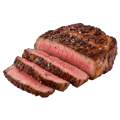 Steak, a potato and broccoli62 g protein100
 Three eggs, Greek yogurt and strawberries36 g protein92
 Chicken, rice and broccoli36 g protein92
 Three eggs, toast and strawberries25 g protein67
 Eggs and toast18 g protein48
 Greek yogurt and berries18 g protein48
 Cereal and milk11 g protein29
 A bagel with butter9 g protein24
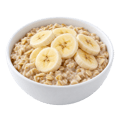 Oatmeal and a banana7 g protein19
Oatmeal and a banana has 7 g. Two eggs on whole wheat toast have 18 g, which sounds like a protein breakfast and lands at about half the line. Even three eggs with toast and strawberries, a big breakfast at 25 g, is a few grams short. The fix that works on almost every breakfast here is a second protein food, and a cup of plain Greek yogurt is the easiest one, at 17 g for 100 calories.


Eggs and toast
2 eggs, 2 slices whole wheat bread, 1 tbsp butter
400 calories, 18 g protein, 3.8 g fiber
- Energylight400 cal
- Processingmixed65% whole food
- Musclevery low18 g protein
- Hungersome3.8 g fiber, 2.3 cal a gram
- Nutrientssome0 cups of plants
- Glucosesteady0 g fast carbs
The one changeAdd a cup of plain Greek yogurt and it's B


Three eggs, Greek yogurt and strawberries
3 eggs, 1 container Greek yogurt, 1 cup strawberries
380 calories, 36 g protein, 3.8 g fiber
- Energylight380 cal
- Processingwhole100% whole food
- Musclehigh36 g protein
- Hungerfilling3.8 g fiber, 0.8 cal a gram
- Nutrientsdense1 cup of plants
- Glucosesteady0 g fast carbs
The one changeAdd a handful of almonds and it's A
How to get more protein at breakfast has more swaps, and breakfast is the most important meal has the rest of the story.
What does 30 grams of protein look like?
These are the values the checker uses, mostly from the USDA’s Nutritive Value of Foods. A palm is 3 oz of cooked meat, fish or poultry, the CDC’s measure, and a fist is a cup.
| Food | Amount | Protein | Calories |
|---|---|---|---|
| Chicken breast | A palm (3 oz) | 27 g | 140 |
| Steak | A palm (3 oz) | 26 g | 166 |
| Cottage cheese | A cup | 26 g | 217 |
| Salmon | A palm (3 oz) | 23 g | 184 |
| Tuna, canned | A palm (3 oz) | 22 g | 99 |
| Lentils | A cup | 18 g | 230 |
| Plain Greek yogurt | One 6 oz cup | 17 g | 100 |
| Black beans | A cup | 15 g | 227 |
| Eggs | Two | 12 g | 156 |
| Milk | A cup | 8 g | 121 |
| Almonds | A cupped hand (1 oz) | 6 g | 164 |
Thirty grams is a palm of chicken with half a cup of beans on the side, or five eggs, or a cup of cottage cheese with a handful of almonds. Chicken, canned tuna and Greek yogurt bring the most protein for their calories, and beans and lentils bring fiber with theirs. What 30 grams of protein looks like has it as plates, and the hand portions calculator turns any food into grams.
How much is too much at one meal?
You’ll hear that the body can only use 20 to 30 g at once. That idea came from a 2009 study of 6 young men after a hard leg workout, where muscle building over the next four hours topped out at 20 g of egg protein. A 2023 trial of 36 young men gave 0, 25 or 100 g of milk protein after a full-body workout and measured for 12 hours. The 100 g dose gave a bigger response that was still going at the end. A 2018 review set a target of about 0.4 g per kg a meal over at least four meals for people trying to build muscle, and up to 0.55 g per kg.
For a meal, that means the 30 to 40 g line is a floor to reach, and a bigger plate of protein isn’t wasted. The 30 gram myth has the whole story, and protein.guide covers it too, in can you only absorb 30 g at a meal.
Who needs more, or less?
People lifting hard to build muscle often go to the top of the range or past it, and people with a lot of weight to lose usually count from their goal weight instead of today’s. protein.guide covers protein at each meal across the day, strength.guide covers eating for strength training, and the plate size calculator shows your grams per plate. If you have kidney disease, ask your doctor how much protein is right for you before you eat more.
What the evidence doesn’t show
The muscle studies are small, mostly in young men, and they measured muscle building over hours instead of muscle gained over months. The even-split study had 8 people, and in the breakfast trial the 35 g group didn’t beat the 13 g group when the two were compared directly, only the skippers. We still think protein at every meal is the right call, since it costs nothing, it helps with hunger in trials, and the 2026 US guidelines say the same.
9 sources
- US Department of Agriculture and US Department of Health and Human Services, Dietary Guidelines for Americans, 2025 to 2030, January 2026cdn.realfood.gov
- Mamerow et al., Dietary protein distribution positively influences 24-h muscle protein synthesis in healthy adults, Journal of Nutrition, 2014europepmc.org
- Leidy et al., A high-protein breakfast prevents bodyfat gain, through reductions in daily intake and hunger, in breakfast skipping adolescents, Obesity, 2015europepmc.org
- Moore et al., Ingested protein dose response of muscle and albumin protein synthesis after resistance exercise in young men, American Journal of Clinical Nutrition, 2009europepmc.org
- Trommelen et al., The anabolic response to protein ingestion during recovery from exercise has no upper limit in magnitude and duration in vivo in humans, Cell Reports Medicine, 2023pmc.ncbi.nlm.nih.gov
- Schoenfeld and Aragon, How much protein can the body use in a single meal for muscle-building? Implications for daily protein distribution, Journal of the International Society of Sports Nutrition, 2018pmc.ncbi.nlm.nih.gov
- CDC, Diabetes meal planning (hand portions)cdc.gov
- Gebhardt and Thomas, Nutritive Value of Foods, USDA Agricultural Research Service, Home and Garden Bulletin 72, 2002 (the meal checker's food values)ars.usda.gov
- USDA FoodData Central, Yogurt, Greek, plain, nonfat (Standard Reference)fdc.nal.usda.gov