Can you get all your nutrients from food?
On this page
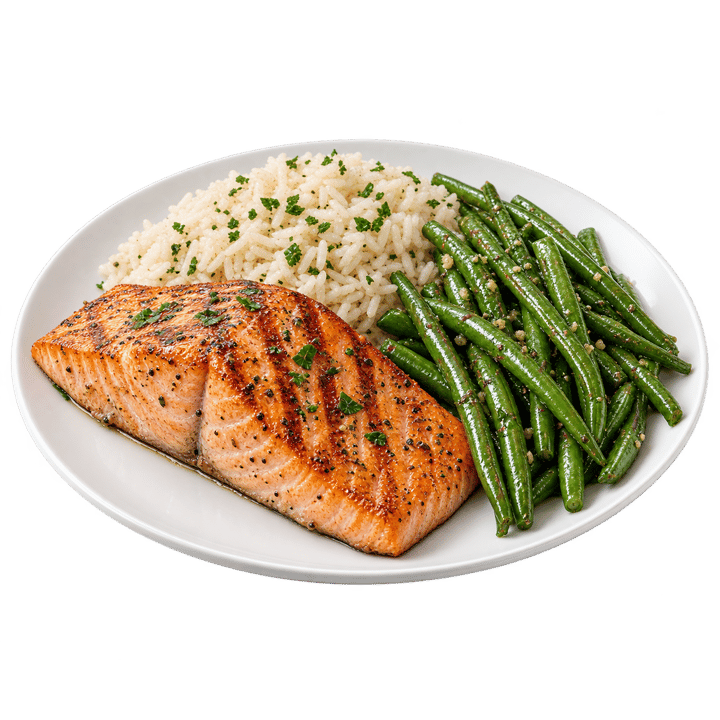
For most adults, yes. A normal day of A plates from this site covers most of the vitamins and minerals on a food label, and far more than the label’s vitamin C. If you want to, and if you can, food is the way we’d do it. A supplement makes sense for a few clear reasons: pregnancy, a vegan diet, older age, eating very little on a GLP-1 drug, or a deficiency your doctor found.
More than half of US adults say they took at least one supplement in the past month. A multivitamin feels like insurance. If the meals miss something, the pill catches it.
The trouble is that a pill can only bring part of what a meal brings. It has some vitamins and minerals, and no protein, no fiber and nothing that fills you up. The day that needs the insurance most is usually short on all of those too.
What we’d do
Get it from food first. Build each plate with a protein, vegetables or beans, a starch you could name and a little fat, and the vitamins come along with the rest. Take a supplement when there’s a reason for one. If you’re pregnant or could become pregnant, eat no animal foods, are older, or eat very little on a GLP-1, ask your doctor which one you need. The 2026 US guidelines put the whole idea in three words, “eat real food”.
If you remember three things
- Food brings the whole supply run. Protein, fiber and fullness come with the vitamins. A pill brings only some of the vitamins.
- A day of A plates covers most of the label. Vitamin C, vitamin A and the B vitamins several times over, and most of the calcium, iron and potassium.
- Some people do need one. Folic acid before pregnancy, B12 on a vegan diet, and what your doctor finds when you’re older or on a GLP-1.
The first nutrition trial was a food trial
On May 20, 1747, a Scottish navy surgeon named James Lind took twelve sailors with scurvy on board the Salisbury and split them into six pairs. One pair drank cider, one took drops of a remedy called elixir of vitriol, one took vinegar, one drank sea water, one took a paste of garlic and mustard seed, and one got two oranges and a lemon a day. The fruit ran out after six days.
Lind wrote that “the most sudden and visible good effects were perceived from the use of the oranges and lemons”. One of those two sailors was fit for duty at the end of the six days. Scurvy is what happens when the body runs out of vitamin C, and people can’t make their own (our ancestors lost the working gene about 61 million years ago).
A ship at sea is a supply run with no stops, and your body is one too, which is the idea behind the whole guide. A cup of broccoli has 116 mg of vitamin C in the checker’s food table, more than the label’s whole day of 90 mg.
What does a day of real food cover?
Here are two days at about 1,700 calories each, worked out from the checker’s food table against the FDA’s Daily Values. The first is three A plates and a snack from this site. The second is a day a lot of people eat, cereal and milk, a turkey sandwich with chips, three slices of pizza with a soda, and a little ice cream.
- Vitamin C
- Vitamin A
- Riboflavin
- Niacin
- Thiamin
- Potassium
- Calcium
- Iron
The A day covers vitamin C four times over, vitamin A several times over and every B vitamin the table counts. It comes in a little under the full Daily Value on calcium, iron and potassium, at 73% to 90%, with 126 g of protein and 33 g of fiber.
The usual day surprises people in the other direction. It isn’t short on everything. Breakfast cereal and white flour are fortified, so it gets its iron and B vitamins. What it’s missing is potassium (41%), vitamin C (49%), most of its fiber (5 g) and half of its protein. A multivitamin could cover the vitamin C. It can’t add 28 g of fiber or 60 g of protein, and the day’s plates would still grade a C or a D.
A simple way to picture it
A multivitamin is like the spare tire in your trunk. It’s good to have when a tire goes flat, and it isn’t built to drive on every day. Food is the four tires and the fuel.
What does the evidence say about multivitamins?
In 2022, the US Preventive Services Task Force looked at whether vitamins and minerals in pill form prevent heart disease or cancer in healthy adults. For multivitamins, it said “the current evidence is insufficient to assess the balance of benefits and harms”. It recommended against beta carotene and vitamin E supplements for that purpose. That review covered adults who weren’t pregnant and didn’t have a known deficiency, which is most adults.
Who should think about a supplement?
The 2026 US guidelines name the cases, and each one is a conversation with your doctor.
- Pregnancy, or if you could become pregnant. The guidelines say to talk to your doctor about a daily prenatal vitamin during pregnancy, and the Task Force recommends that anyone planning or capable of pregnancy take a daily supplement with folic acid.
- A vegan diet. The guidelines list gaps in vitamin B12, vitamin D, calcium, iron, zinc and more, and say to “prioritize targeted supplementation” and check your levels from time to time.
- Older age. Some older adults need fewer calories but as much or more protein, B12, vitamin D and calcium. The guidelines say supplements may be needed when food or absorption falls short, under a doctor’s care.
- A GLP-1 drug. Eating much less means fewer vitamins and minerals come in. A 2025 advisory from four US nutrition and obesity groups says supplements such as vitamin D, calcium, B12 or a multivitamin can be considered, with levels checked during treatment. What to eat on Ozempic or another GLP-1 has the food side.
- A deficiency your doctor found. Low iron or low B12 on a blood test is a reason to ask your doctor what to take and for how long.
What the checker can’t count
The meal checker counts eight minerals and vitamins: calcium, iron, potassium, vitamins A and C, thiamin, riboflavin and niacin. Vitamin B12, vitamin D, folate, iodine, zinc and magnesium aren’t in its table, and those are the ones the guidelines name for pregnancy, vegans and older adults. A plate that clears Nutrients on the checker is rich in the eight it counts, and the rest still come from eating a range of foods, or from a supplement when you need one.
Protein works the same way as the vitamins. You can buy it as powder, and you can get it from food. High protein meals has 18 plates that reach 30 g or more without any.


A plate that covers a lot
1 palm salmon, 1 sweet potato, 1 cup broccoli, ½ tbsp olive oil
440 calories, 31 g protein, 8.9 g fiber
- Energylight440 cal
- Processingwhole100% whole food
- Musclehigh31 g protein
- Hungerfilling8.9 g fiber, 1.1 cal a gram
- Nutrientsdense2 cups of plants
- Glucosesteady0 g fast carbs
The one changeAdd a cup of green beans and it's A+


Lentils, spinach and Greek yogurt
1 cup lentils, 2 cups spinach, 1 tomato, 1 container Greek yogurt, 1 tbsp olive oil
490 calories, 38 g protein, 18.6 g fiber
- Energylight490 cal
- Processingwhole100% whole food
- Musclehigh38 g protein
- Hungerfilling18.6 g fiber, 0.9 cal a gram
- Nutrientsdense3 cups of plants
- Glucosesteady0 g fast carbs
The one changeNone. It clears all six.
8 sources
- US Department of Agriculture and US Department of Health and Human Services, Dietary Guidelines for Americans, 2025 to 2030, January 2026 (eat real food, prenatal vitamins, older adults, vegetarians and vegans)cdn.realfood.gov
- US Preventive Services Task Force, Vitamin, Mineral, and Multivitamin Supplementation to Prevent Cardiovascular Disease and Cancer: Preventive Medication, June 21, 2022uspreventiveservicestaskforce.org
- Lind, A Treatise of the Scurvy, 1753 (the trial aboard the Salisbury, 20 May 1747), excerpt from the American Revolution Instituteamericanrevolutioninstitute.org
- The James Lind Library, Lind J (1753)jameslindlibrary.org
- Drouin, Godin and Pagé, The genetics of vitamin C loss in vertebrates, Current Genomics, 2011pmc.ncbi.nlm.nih.gov
- Mozaffarian et al., Nutritional priorities to support GLP-1 therapy for obesity: a joint advisory from the American College of Lifestyle Medicine, the American Society for Nutrition, the Obesity Medicine Association, and The Obesity Society, American Journal of Clinical Nutrition, 2025pmc.ncbi.nlm.nih.gov
- US Food and Drug Administration, Daily Value on the Nutrition and Supplement Facts Labels, current as of March 2024fda.gov
- Gebhardt and Thomas, Nutritive Value of Foods, USDA Agricultural Research Service, Home and Garden Bulletin 72, 2002 (the meal checker's food values)ars.usda.gov