Is my meal healthy?
Tap or type what's on your plate and fix each amount. The six meters fill in and the one change that lifts it most shows up.
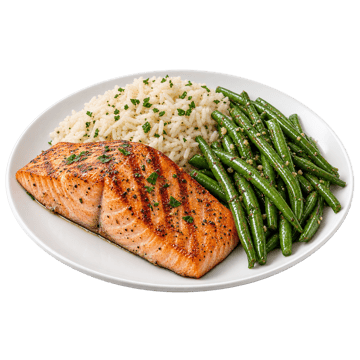
Your plate is empty. Add what you're eating below.
Graded for 170 lb, 3 meals a day, 2,000 calories a day: plates of 500 to 830 calories with 30 g of protein.
What your grade means and what to do next
An A or A+ clears all six lines. Keep that plate, and make it one you can cook without a recipe. A B+ or lower usually means one meter is under its line, shown in red or amber. The one change under the meters is the edit that lifts the grade most, so make that one and check again. A C or lower is usually missing protein, fiber or both, or has a sweet drink on it, and the one change starts there.
Then put in the next meal you eat most. Breakfast is the one that's short on protein most often. If you want more plates that already work, healthy meal ideas and high protein meals have them graded.
The six meters
Gyroscope grades every meal on six systems, the six jobs a meal does for your body. This checker is the free version. It works each one out from the food table below and shows you the working. The app reads its meters its own way, so a plate won't always get the same numbers in both. Why we grade meals this way.
 EnergyIs it the right size for your day?
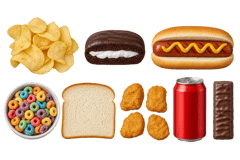 ProcessingIs it food, or a product made to be eaten fast?
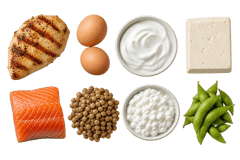 MuscleDoes it bring enough protein to keep and build muscle?
 HungerWill it hold you until the next meal?
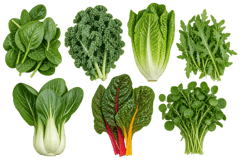 NutrientsDoes it bring minerals and vitamins for its calories?
 GlucoseDoes it keep your blood sugar steady?
Each meter runs from 0 to 100 and has a line. The grade is the average of the six, on the same letter cutoffs as the Gyroscope app (A+ over 96, A from 90, B+ over 88, B from 80, C+ over 76, C from 50, D over 40). A plate has to clear all six lines to be an A, so a plate that misses one tops out at B+, however good the other five are. For a 170 lb person eating 2,000 calories a day over three meals, the lines are these:
| Meter | What it counts | The line |
|---|---|---|
| Energy | The plate's calories against a plate that fits your day, which is your day's calories over your meals, give or take a quarter (500 to 830) | Half a plate (330) up to the top of the window (830) |
| Processing | The share of the calories that isn't ultra-processed (NOVA group 4) | 70 (no more than 30% ultra-processed) |
| Muscle | Protein against your share of 1.2 to 1.6 g per kg a day, 80 at 30 g and 100 at 40 g | 80 (30 g) |
| Hunger | Protein (45%), fiber against 9.3 g (30%), and how much food there is for the calories (25%). 1.5 calories a gram or less is full marks and 4 or more is none. Drinks add calories but no food | 80 |
| Nutrients | Calcium and potassium (30%), iron (20%), vitamins A and C, thiamin, riboflavin and niacin (35%), each against the plate's calorie share of its Daily Value, and cups of vegetables, fruit and beans against 1.7 (15%) | 70 |
| Glucose | Fast carbs (added sugar, carbs you drink, and starch with more than 10 g of carbs per gram of fiber) in full, slow carbs at half, less up to 40% for the protein and fiber beside them. 100 at 15 g or less, 0 at 75 g, and the fast share of the calories can pull it lower | 70 |
The one change comes from trying every small edit on your plate (add a palm of protein or a cup of vegetables, swap a starch, drop or halve a drink, sauce or sweet) and keeping the one that lifts the grade most. It tries fixing what's there before adding more.
Three plates, worked


Chicken, rice and broccoli
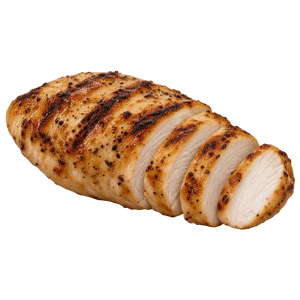
1 palm chicken breast, 1 cup white rice, 1 cup broccoli, 1 tbsp olive oil
510 calories, 36 g protein, 5.1 g fiber
- Energyfits510 cal
- Processingwhole100% whole food
- Musclehigh36 g protein
- Hungerfilling5.1 g fiber, 1.2 cal a gram
- Nutrientsdense1 cup of plants
- Glucosesteady44 g fast carbs
The one changeSwap the white rice for black beans and it's A+


Oatmeal and a banana
1 cup oatmeal, 1 banana
250 calories, 7 g protein, 6.8 g fiber
- Energysmall250 cal
- Processingwhole100% whole food
- Musclevery low7 g protein
- Hungersome6.8 g fiber, 0.7 cal a gram
- Nutrientssome1 cup of plants
- Glucosesteady0 g fast carbs
The one changeAdd a cup of plain Greek yogurt and it's B


A burger, fries and a soda
1 sandwich cheeseburger, 1 small order of french fries, 12 fl oz cola
740 calories, 20 g protein, 3 g fiber
- Energyfits740 cal
- Processingprocessed0% whole food
- Musclevery low20 g protein
- Hungerlight3 g fiber, 3.7 cal a gram
- Nutrientslow0 cups of plants
- Glucosea spike73 g fast carbs
The one changeSwap the fries for a cup of broccoli and it's C
Where the numbers come from
Food values are from the USDA's Nutritive Value of Foods (Home and Garden Bulletin 72), minerals and vitamins included, with six foods from the USDA's Standard Reference and the FDA. Daily Values are the FDA's label values: calcium 1,300 mg, potassium 4,700 mg, iron 18 mg, vitamin A 900 mcg, vitamin C 90 mg, thiamin 1.2 mg, riboflavin 1.3 mg and niacin 16 mg. The bulletin has no column for added sugar, so for sweetened foods (drinks, sauces, sweets, sweetened cereal and yogurt, fast food burgers and pizza) the checker counts all their sugar, from USDA records, and for whole foods, fruit, juice and milk none of it. Hand measures follow the CDC: a palm is 3 oz of meat or fish, a fist is a cup, a thumb tip is a tablespoon.
Your plate is kept in this browser and in the page's address, so you can send it to someone.
11 sources
- US Department of Agriculture and US Department of Health and Human Services. Dietary Guidelines for Americans, 2025 to 2030. January 2026cdn.realfood.gov
- Daily Servings by Calorie Level, Dietary Guidelines for Americans 2025 to 2030cdn.realfood.gov
- US Food and Drug Administration. Daily Value on the Nutrition and Supplement Facts Labels (current as of March 2024)fda.gov
- NIDDK. Eating, diet and nutrition for diverticular disease (the 2020 to 2025 guidelines use 14 g of fiber per 1,000 calories)niddk.nih.gov
- Monteiro CA, Cannon G, Levy RB, et al. Ultra-processed foods: what they are and how to identify them. Public Health Nutrition, 2019europepmc.org
- Hall KD, Ayuketah A, Brychta R, et al. Ultra-processed diets cause excess calorie intake and weight gain: an inpatient randomized controlled trial of ad libitum food intake. Cell Metabolism, 2019pmc.ncbi.nlm.nih.gov
- Rolls BJ. The relationship between dietary energy density and energy intake. Physiology and Behavior, 2009pmc.ncbi.nlm.nih.gov
- Mozaffarian RS, Lee RM, Kennedy MA, et al. Identifying whole grain foods: a comparison of different approaches for selecting more healthful whole grain products. Public Health Nutrition, 2013pubmed.ncbi.nlm.nih.gov
- Gebhardt SE, Thomas RG. Nutritive Value of Foods. USDA ARS, Home and Garden Bulletin 72, 2002ars.usda.gov
- USDA Agricultural Research Service. FoodData Central, Standard Reference Legacy records for Greek yogurt, deli turkey, quinoa, ranch dressing, fried rice and cooked shrimpfdc.nal.usda.gov
- CDC. Diabetes Meal Planning (hand portions)cdc.gov