What to order when you eat out
On this page
Order a protein you can see, a vegetable side and water, get the sauce on the side, and box half of a big plate. In a study of 364 popular restaurant meals, the average was about 1,200 calories, nearly twice a typical plate.
People tend to treat eating out one of two ways. Either it’s a night off and nothing counts, or they order the dish that sounds healthy and assume it is. Neither works for someone who eats out three times a week. The sit-down place isn’t automatically better than the chain either. In the same study, chain meals weren’t meaningfully different from the local restaurants’ meals.
What we’d do
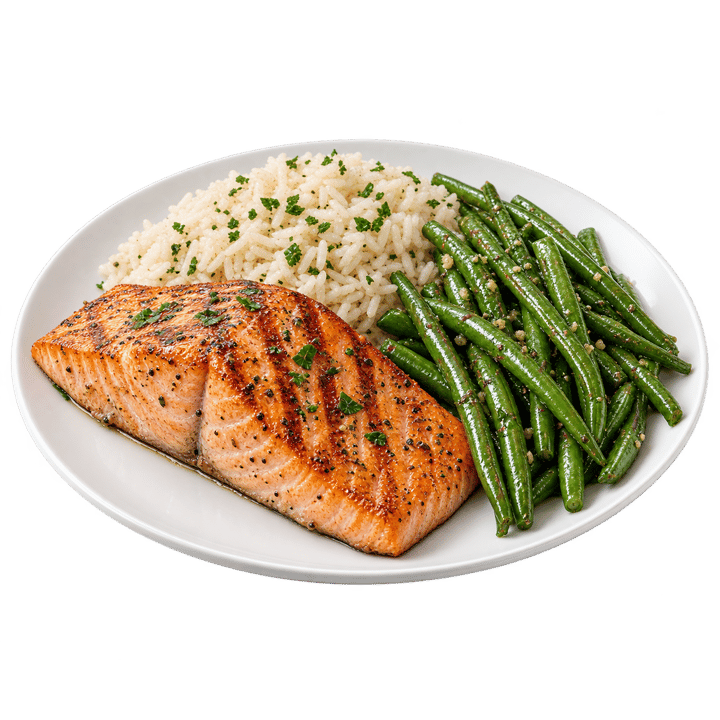
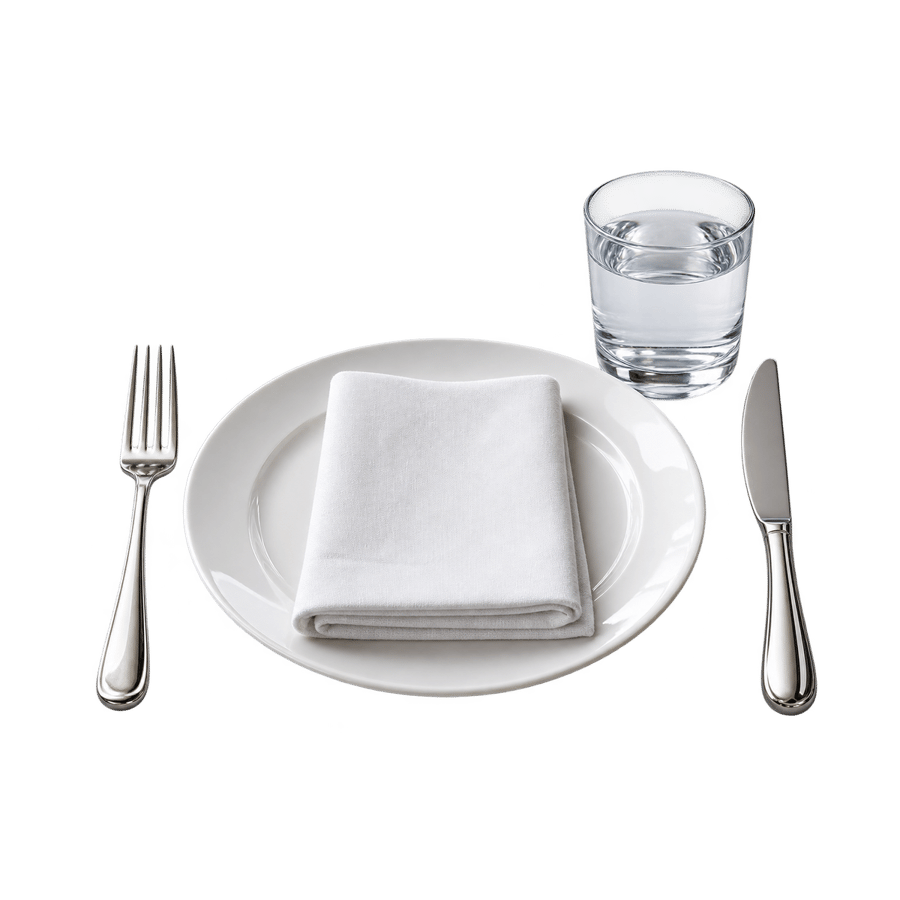
Use five rules at any counter or table. Pick a protein you can see, grilled, roasted or baked. Get a vegetable side in place of fries or chips. Drink water. Ask for the sauce or dressing on the side. And when the plate comes, box half before you start. Look at the menu online first so you aren’t deciding hungry, and leave the bread basket until your food arrives.
If you remember three things
- Restaurant plates run big. They averaged about 1,200 calories, and 92% had more than 570.
- Five rules cover most menus. A protein you can see, a vegetable side, water, the sauce on the side, box half.
- Bowls you build yourself grade best. You choose each part, so you can clear all six meters on purpose.
How big are restaurant meals?
Tufts researchers ordered the most popular meals at 123 restaurants in Boston, San Francisco and Little Rock, 364 meals in all, and measured their calories in a lab. The average was 1,205 calories. Ninety-two percent had more than 570, which the team used as the calories a typical woman needs at one lunch or dinner. They also checked large chains and found their meals weren’t meaningfully different.
| Cuisine | Average meal |
|---|---|
| Italian | 1,556 calories |
| Chinese | 1,478 |
| American | 1,451 |
| Indian | 1,250 |
| Thai | 1,163 |
| Mexican | 1,110 |
| Vietnamese | 984 |
| Japanese | 945 |
| Greek | 904 |
Even the lowest, Greek, averaged more than the top of the window for a 2,000 calorie day eaten over three meals. On the meal checker, 1,200 calories is over the top of the Energy meter’s window for anyone eating 2,800 calories a day or less over three meals.
A simple way to picture it
Treat a restaurant plate like a large pizza. It comes as one order on one plate, but for most people it’s two meals.
The five rules
- A protein you can see. A chicken breast, a piece of fish, steak, eggs or beans, cooked a way you could name. The 2025 to 2030 US guidelines say to swap deep-fried cooking for “baked, broiled, roasted, stir-fried, or grilled”. Menu words like crispy, battered, tempura and fried usually mean breading and frying oil.
- A vegetable side. Ask for a side salad, steamed vegetables or a baked potato in place of fries. On the checker, a cheeseburger, fries and a soda is a D, and swapping the fries for a baked potato makes it a C.
- Water. A 12 oz soda has about 37 g of sugar, nearly four meals’ worth of the guidelines’ 10 g. Salmon, a potato and green beans with a soda is a C+ on the checker, because the soda sinks its Glucose meter, and with water it’s an A.
- The sauce on the side. Dressings, mayo, butter sauces and sour cream are often the most calorie-dense part of a plate. Four tablespoons of ranch is about 256 calories. With it on the side you use what you want, and olive oil and vinegar is a good swap.
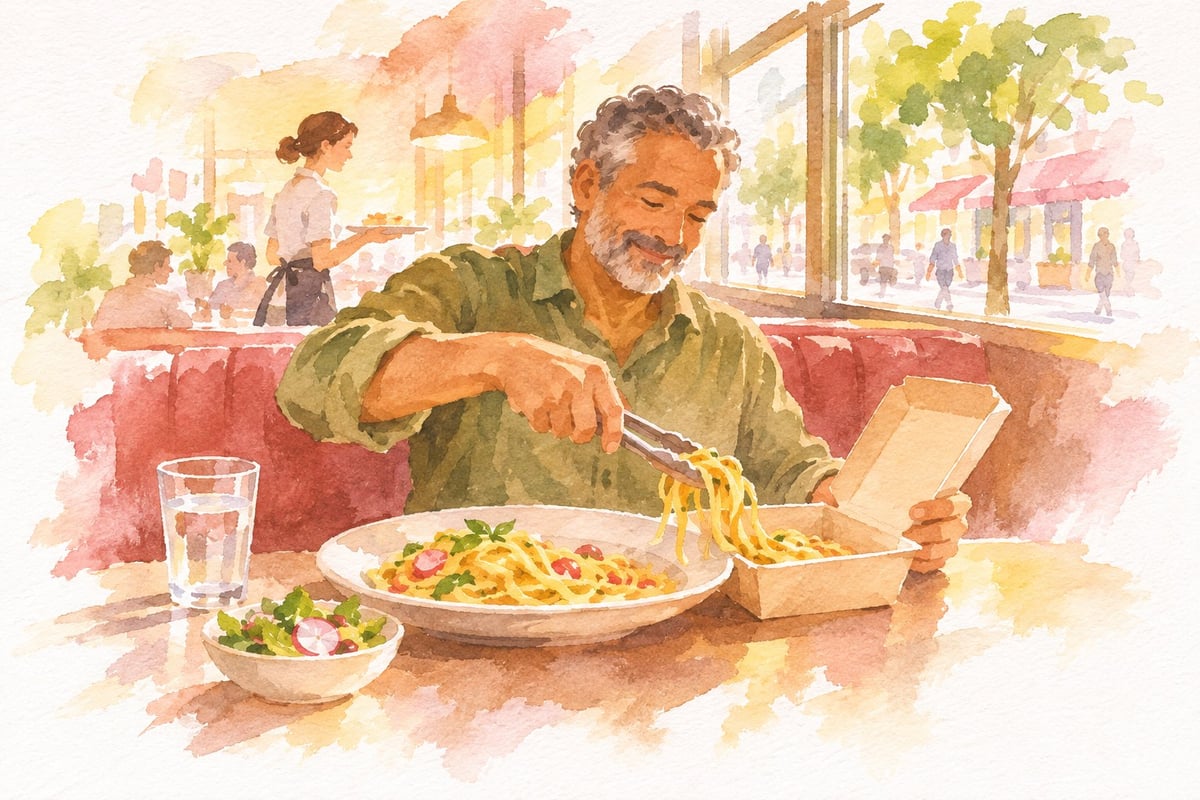
- Box half. Ask for a box when the food arrives and put half away for tomorrow. Half of a 1,200 calorie plate is about 600, right inside a 2,000 calorie day’s window. Splitting a main or a dessert works too.
Each rule looks after one or two of the six jobs a meal does. The protein covers Muscle and Hunger, the vegetable side brings Nutrients and more Hunger, water and the sauce on the side protect Glucose and Processing, and boxing half takes care of Energy.
What about fast food?
Fast food isn’t rare. On a given day between 2013 and 2016, 36.6% of US adults ate some. Since May 2018, chains with 20 or more locations have had to post calories on the menu, which makes it easier to check an order before you place it.
The best orders are the ones you build. On the checker, a bowl with a palm of chicken, half a cup of black beans, half a cup of brown rice, lettuce, salsa and a little cheese is about 440 calories and an A. A grilled chicken salad with beans, corn and two tablespoons of dressing is an A too. The default combo, a burger, fries and a soda, is a D, and it clears only the Energy meter. You can’t eat healthy at a fast food place has more orders graded.
The old tips that still hold
Gyroscope’s old restaurant guide had more tips, and these still work.
- Don’t show up starving. Eat normally through the day, so a normal portion is enough when you get there.
- Skip the extras while you wait. Bread, chips and salsa add up before the main arrives.
- Ask for swaps. A tomato sauce in place of a cream sauce, black beans in place of white rice, a lettuce wrap or one half of the bun.
- Pick one treat. A rich main or a dessert, and share the dessert if you get one.
Is it okay to just enjoy it?
Yes. A birthday dinner or a night out with friends doesn’t need a grade, and one big plate does little to a week. The rules are for the meals you eat out every week, the work lunch and the takeout on a busy night, since those add up.
6 sources
- Urban et al., Energy contents of frequently ordered restaurant meals and comparison with human energy requirements and US Department of Agriculture database information: a multisite randomized study, Journal of the Academy of Nutrition and Dietetics, 2016pmc.ncbi.nlm.nih.gov
- Fryar et al., Fast food consumption among adults in the United States, 2013 to 2016, NCHS Data Brief 322, October 2018cdc.gov
- US Food and Drug Administration, Menu labeling requirementsfda.gov
- US Department of Agriculture and US Department of Health and Human Services, Dietary Guidelines for Americans, 2025 to 2030, January 2026cdn.realfood.gov
- Ranch dressing, 426.67 calories per 100 g and 15 g per tablespoon, USDA Standard Reference, on nutritionvalue.orgnutritionvalue.org
- Gebhardt and Thomas, Nutritive Value of Foods, USDA Agricultural Research Service, Home and Garden Bulletin 72, 2002 (the meal checker's food values)ars.usda.gov