Hunger: why do some meals keep you full for hours?
On this page
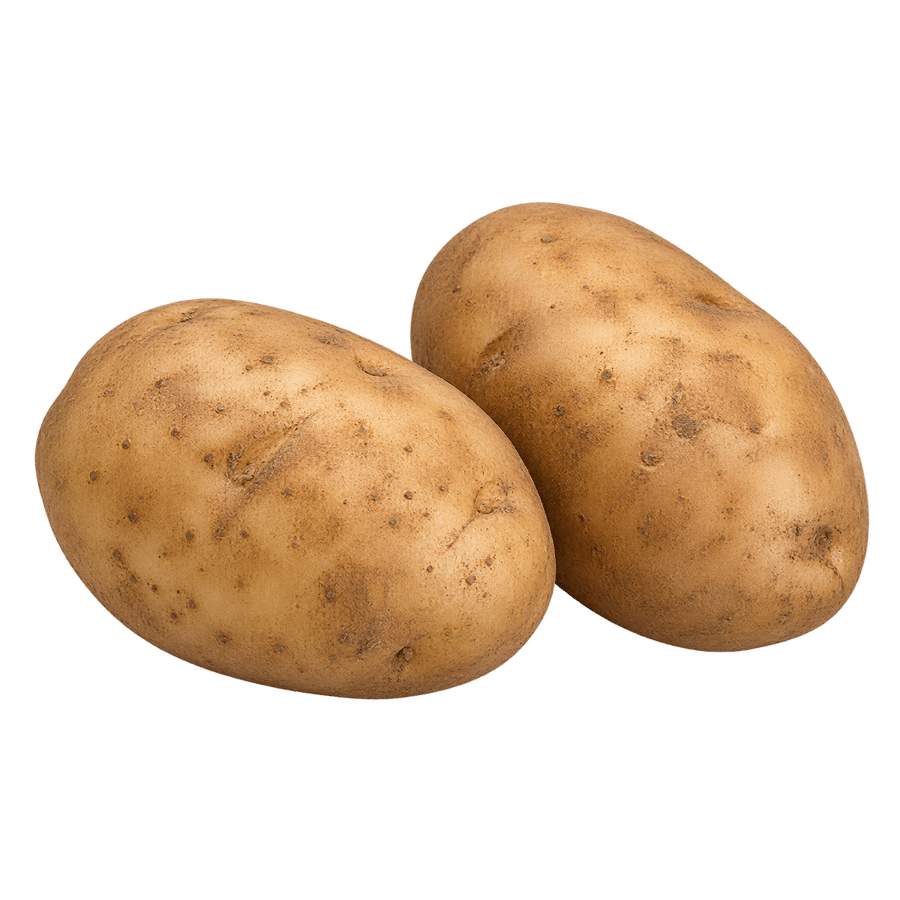
A plate keeps you full when it has protein, fiber and food with water in it, and isn’t mostly fat, sugar and refined starch. In a 1995 test of 38 foods served at 240 calories each, boiled potatoes kept people about seven times fuller than a croissant. That’s the Hunger meter.
Most people think a calorie fills you up like any other calorie, or that staying full is a matter of willpower. But 240 calories of potato and 240 calories of croissant are nothing alike in how long they last. If you’re hungry an hour after a meal, the plate is usually the reason, and it’s usually missing one of three things.
What we’d do
Build the plate around a palm of protein and a fist or two of plants, and pick a starch that’s mostly water and fiber, like potatoes, beans or oatmeal, over bread and pastry. Have soup or a big salad when you want volume, and eat your fruit instead of drinking it. Put protein in your breakfast, since that’s where it helps most with the rest of the day’s hunger.
If you remember three things
- Potatoes beat croissants seven to one. At the same 240 calories, boiled potatoes scored 323 for fullness and a croissant 47.
- Water in the food fills you. The same chicken and rice eaten as soup cut lunch by about 100 calories. The same water drunk from a glass didn’t.
- A light plate isn’t a filling one. A side salad with bottled dressing is under 200 calories and fails Hunger, because it has almost no protein.
The potato and the croissant
In 1995 a team of nutrition researchers fed 38 common foods to groups of 11 to 13 people, always 240 calories (1,000 kJ) at a time. They asked how full people felt every 15 minutes for two hours and gave every food a score, with white bread set at 100.
Boiled potatoes came top, at 323. The croissant came last, at 47, almost seven times lower. Then the researchers looked at what the most filling foods had in common. The heavier the serving for its calories, the fuller it kept people. Foods with more protein, fiber and water kept people fuller, and foods with more fat kept them less full. The foods people rated tastiest tended to be the least filling.
A simple way to picture it
Think of your stomach as a car’s fuel tank with a gauge that measures how full the tank is, not how much energy is in it. A croissant is like a cup of rocket fuel, a lot of energy that barely moves the needle. A potato is like a full tank of regular gas. It has the same energy but fills the tank, and the gauge says full for hours.
The picture stops working for protein. In the same test, foods with more protein kept people fuller at the same weight, which a fuel gauge wouldn’t predict. A plate needs enough food to fill the tank and enough protein to keep the gauge up.
Water you eat and water you drink
In 1999 researchers at Penn State gave 24 women one of three starters before lunch. One was a chicken rice casserole, one was the same casserole with a glass of water, and one was chicken rice soup made from the same ingredients and the same water. After the soup, the women ate about 290 calories at lunch. After the casserole, with or without the glass of water, they ate about 395. They didn’t make it up at dinner.
The water had to be in the food. Soups, stews, vegetables, fruit, potatoes and oatmeal all carry a lot of water, which is why a plate built from them fills you on fewer calories. Scientists call this energy density, the calories in each gram of food. It runs from 0 for water to 9 for pure fat. In a two-day study, when every food on offer was made about 30% less energy dense, people ate about 30% fewer calories and rated their hunger and fullness about the same.
How the Hunger meter works
The checker builds its Hunger meter from those three things, and a plate needs 80 to clear the line.
- Protein, 45%. Full marks at your share of the day’s protein, 30 g for a 170 lb person eating three times a day, the same line the Muscle meter uses.
- Fiber, 30%. Full marks at your plate’s share of 14 g per 1,000 calories, about 9 g on 2,000 calories over three meals.
- Food for the calories, 25%. The plate’s calories over the weight of its food. At 1.5 calories a gram or less it gets full marks, and at 4 or more it gets nothing. A drink adds its calories but none of its weight, since in the soup study, water drunk with the meal didn’t fill people the way water in the food did.
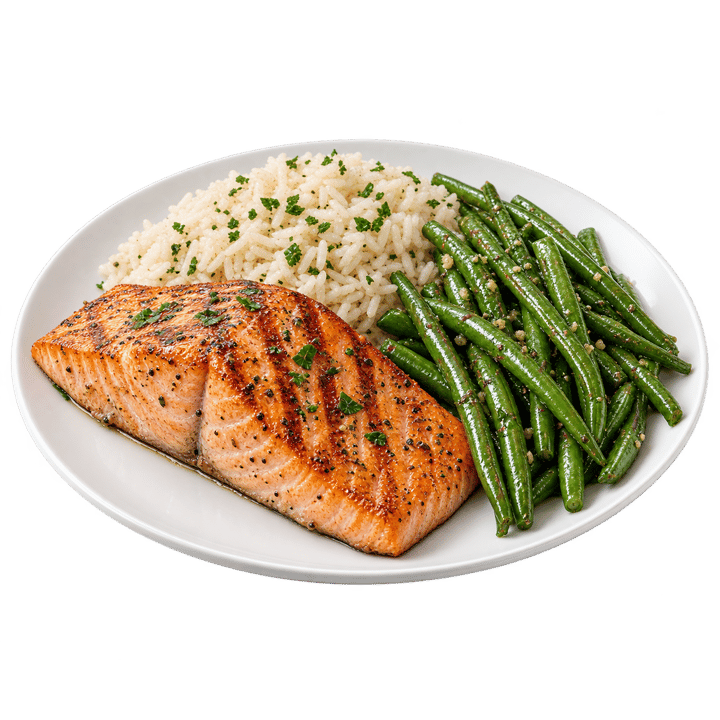
A palm of salmon, a potato and green beans comes to about 1.3 calories a gram, so it gets full marks on that part. A glazed doughnut is about 4 calories a gram and gets none. A soda counts all its calories and no food at all, so a burger, fries and a soda comes to nearly 4 calories a gram even though the burger alone is lighter than that.
 Chicken, black beans and broccoli19.5 g fiber, 1.2 cal a gram100
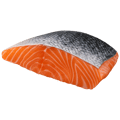 Salmon, a potato and green beans8.8 g fiber, 1.3 cal a gram98
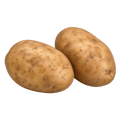 A potato, three eggs and spinach6.4 g fiber, 1.3 cal a gram83
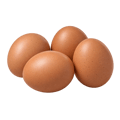 Eggs and toast3.8 g fiber, 2.3 cal a gram56
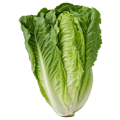 A side salad with Italian dressing4.8 g fiber, 0.5 cal a gram47
 A burger, fries and a soda3 g fiber, 3.7 cal a gram42
 Two croissants and orange juice3.5 g fiber, 5 cal a gram29
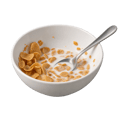 Cereal and milk1.2 g fiber, 6.5 cal a gram20
 A glazed doughnut0.7 g fiber, 4 cal a gram8
How Gyroscope frames Hunger
In the Gyroscope app, Hunger is the satiety meter on a meal’s Grade page, and above 80 is the level the app treats as keeping you full until your next meal. The checker draws its line at 80 too. The checker here is the free version, worked out in the open from the USDA’s food table, and the app works its meters out its own way, so a plate won’t always get the same number in both.
Two plates at the same calories
On the meal checker, two croissants with a cup of orange juice come to about 570 calories, 12 g of protein, 3.5 g of fiber and no fruit or vegetables. A baked potato with three eggs, two cups of spinach and a little butter comes to the same 570 calories, with 25 g of protein, 6.4 g of fiber and 2 cups of plants.


Two croissants and orange juice
2 croissants, 1 cup orange juice
570 calories, 12 g protein, 3.5 g fiber


The croissants are about 5 calories a gram, so they get nothing for food on the plate, and the juice adds calories without any. The potato plate clears Hunger easily. It misses only Muscle, by a few grams, which is the same thing that keeps most breakfasts from an A.

The light lunch that leaves you starving
A side salad feels like the careful choice. Three cups of lettuce, a tomato, some cucumber and two spoons of bottled Italian dressing come to under 200 calories, and most people would call it healthy. On the checker it fails Hunger, because it has 5 g of protein and only half the fiber a plate needs.


A side salad with Italian dressing
3 cups salad greens, 1 tomato, ½ cup cucumber, 2 tbsp italian dressing
200 calories, 5 g protein, 4.8 g fiber
- Energysmall200 cal
- Processingprocessed29% whole food
- Musclevery low5 g protein
- Hungerlight4.8 g fiber, 0.5 cal a gram
- Nutrientsdense3 cups of plants
- Glucosesteady2 g fast carbs
The one changeAdd a palm of chicken breast and it's B
The salad is huge for its calories, so it gets full marks for food. It’s still short on the two parts that carry most of the meter. A palm of chicken on top is the one change, and it’s what turns a side into a meal. The surprises has more plates like this one, and a salad is always the healthy order has the rest.
Protein, and the breakfast trial
In a 2015 trial, 57 young adults who usually skipped breakfast got a 35 g protein breakfast, a 13 g protein breakfast or no breakfast for 12 weeks. Only the high protein group reported less hunger over the day than the skippers. They also ate less in total and gained no fat, while the skippers gained about 3.5 lb. Compared directly, the high and normal protein groups weren’t different, so the trial shows protein beat skipping more clearly than it shows 35 g beat 13 g.
A 2022 trial found a similar pattern with meal size. When 30 adults with overweight or obesity ate a big breakfast and a small dinner for four weeks, they reported less hunger than with the same calories the other way round, and lost the same weight. Energy has what that means for how big each plate should be.
Speed
In the 2019 NIH study, 20 adults ate as much as they wanted for two weeks of ultra-processed meals and two weeks of unprocessed ones. They ate about 500 more calories a day on the ultra-processed meals, and they ate those meals faster. Processing has that study in full, and processing.guide has why people eat more of it.
What we don’t know
The satiety index tested single foods on their own, not mixed meals, and only for two hours. The soup study was in 24 lean women, and the breakfast trial in young adults. Each is small. They agree with each other, though, and with the 2019 NIH study, which is why we build every plate around protein, fiber and food with water in it. The checker’s cutoffs, 1.5 and 4 calories a gram and the split between the three parts, put those findings into one number, and nobody has tested that exact formula in a trial.
7 sources
- Holt et al., A satiety index of common foods, European Journal of Clinical Nutrition, 1995europepmc.org
- Rolls, Bell and Thorwart, Water incorporated into a food but not served with a food decreases energy intake in lean women, American Journal of Clinical Nutrition, 1999europepmc.org
- Rolls, The relationship between dietary energy density and energy intake, Physiology and Behavior, 2009pmc.ncbi.nlm.nih.gov
- Leidy et al., A high-protein breakfast prevents bodyfat gain, through reductions in daily intake and hunger, in breakfast skipping adolescents, Obesity, 2015europepmc.org
- Ruddick-Collins et al., Timing of daily calorie loading affects appetite and hunger responses without changes in energy metabolism in healthy subjects with obesity, Cell Metabolism, 2022europepmc.org
- Hall et al., Ultra-processed diets cause excess calorie intake and weight gain: an inpatient randomized controlled trial of ad libitum food intake, Cell Metabolism, 2019pmc.ncbi.nlm.nih.gov
- Gebhardt and Thomas, Nutritive Value of Foods, USDA Agricultural Research Service, Home and Garden Bulletin 72, 2002 (the meal checker's food values)ars.usda.gov