Nutrients: how many vegetables should be on a plate?
On this page
A good plate brings its fair share of the day’s minerals and vitamins for the calories it costs. If a plate is a third of your day’s calories, it should bring about a third of your calcium, potassium, iron and vitamins. Vegetables, fruit and beans get you there fastest, about 1¾ cups a plate, and they carry the fiber more than 90% of US women and 97% of men miss.
When people picture a nutritious meal, they picture a salad, or a “superfood” like kale or blueberries. But one food with a lot of one vitamin doesn’t make a plate nutritious, and lettuce is mostly water. The minerals most plates on the checker run short on are calcium and potassium, and they come from beans, potatoes with the skin on, leafy greens, yogurt and milk as much as from anything green and leafy.
There’s a second surprise. A bowl of corn flakes with milk scores higher on the checker’s Nutrients meter than chicken, white rice and broccoli. That’s because the cereal has iron and vitamins added at the factory. It still grades a D, which is the best argument for why Nutrients is one job of six and not the whole story.
What we’d do
Put a fist or two of vegetables or fruit on every plate, and put beans on as many plates as you can. Swap a white starch for beans, lentils or a potato with the skin, since it lifts potassium, iron and fiber in one move. Keep a dairy food or a leafy green in your day for calcium. Buy frozen vegetables and canned beans without guilt. They count, they keep, and they often cost less.
If you remember three things
- A fair share for the calories. A plate that’s a quarter of your day should bring about a quarter of each Daily Value.
- Calcium and potassium are the hard ones. On the checker most plates clear the B vitamins and iron easily and fall short on these two.
- Half a cup of beans has about 7.5 g of fiber. That’s most of a plate’s fiber, with potassium and iron on top.
A simple way to picture it
Think of the calories on a plate as money and the nutrients as what you bought with it. A plate of chicken, beans and broccoli is a full grocery bag for the price. A doughnut is a checkout candy bar, and a bowl of fortified cereal is a bag of vitamin pills that leaves you hungry an hour later.
How the checker scores Nutrients
The meal checker counts eight minerals and vitamins the USDA table lists for nearly every food: calcium and potassium, iron, and vitamins A and C, thiamin, riboflavin and niacin. For each one it asks a simple question. Does the plate bring at least its calorie share of the FDA’s Daily Value? A 500 calorie plate on a 2,000 calorie day is a quarter of the day, so it needs a quarter of each one to get full marks on it.
| Nutrient | Daily Value | A quarter of it |
|---|---|---|
| Calcium | 1,300 mg | 325 mg |
| Potassium | 4,700 mg | 1,175 mg |
| Iron | 18 mg | 4.5 mg |
| Vitamin A | 900 mcg | 225 mcg |
| Vitamin C | 90 mg | 22.5 mg |
| Thiamin | 1.2 mg | 0.3 mg |
| Riboflavin | 1.3 mg | 0.33 mg |
| Niacin | 16 mg | 4 mg |
The meter follows the shape of Gyroscope’s, with minerals, trace minerals and vitamins first and plants as the smallest part. Calcium and potassium are 30% of it, iron is 20%, the five vitamins are 35%, and the last 15% is cups of vegetables, fruit and beans against your share of the day’s servings. The line is 70. Since everything is measured against all of the plate’s calories, a small plate isn’t punished for being small, and a big plate can’t pass on bulk alone. A food with no minerals or vitamins listed in the table counts as none, so it adds its calories and nothing else. For now that’s ranch dressing, shrimp, fried rice and mac and cheese.
 Lentils, spinach, tomato and yogurt3 cups of plants100
 Chicken, black beans and broccoli2 cups of plants90
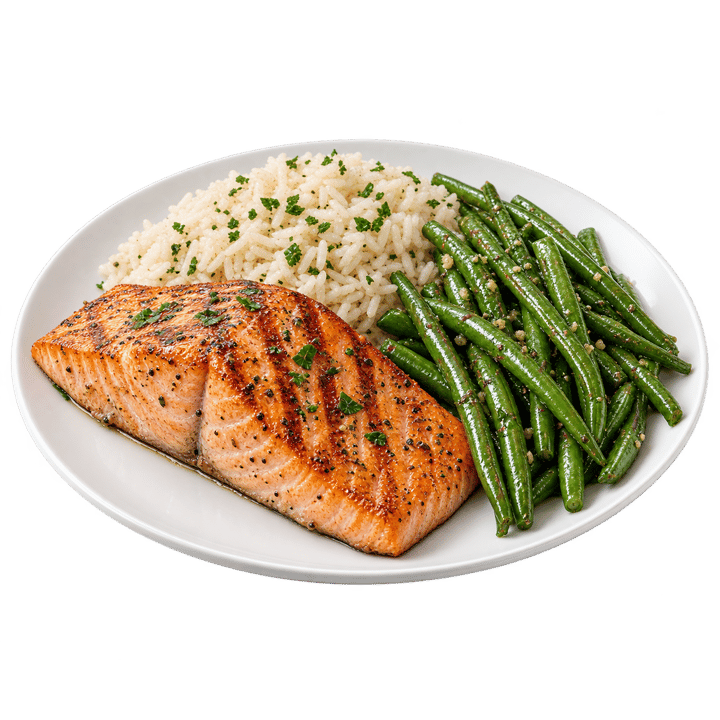
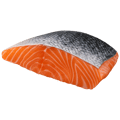 Salmon, a potato and green beans2 cups of plants88
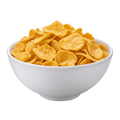 Cereal and milk0 cups of plants80
 Chicken, rice and broccoli1 cup of plants75
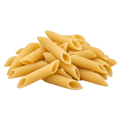 Spaghetti with meat sauce0 cups of plants55
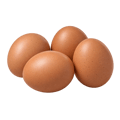 Eggs and toast0 cups of plants52
 A burger, fries and a soda0 cups of plants41
 A glazed doughnut0 cups of plants34
One swap, worked
A palm of chicken, a cup of white rice and a cup of broccoli is about 510 calories, so it needs about a quarter of each Daily Value. It covers its share of iron, vitamin C, vitamin A and the B vitamins, or comes close. It brings about 100 mg of calcium against the 330 its calories call for, and about 730 mg of potassium against 1,190, and it has 1 cup of plants against 1¾.
Swap the rice for a cup of black beans and nothing else changes. Potassium goes to about 1,280 mg, which clears its share, iron goes up by about 40%, fiber goes from 5 g to almost 20, and there are 2 cups of plants. The grade goes from B+ to A+, and beans are why.


Chicken, rice and broccoli
1 palm chicken breast, 1 cup white rice, 1 cup broccoli, 1 tbsp olive oil
510 calories, 36 g protein, 5.1 g fiber
- Energyfits510 cal
- Processingwhole100% whole food
- Musclehigh36 g protein
- Hungerfilling5.1 g fiber, 1.2 cal a gram
- Nutrientsdense1 cup of plants
- Glucosesteady44 g fast carbs
The one changeSwap the white rice for black beans and it's A+

Chicken, black beans and broccoli
1 palm chicken breast, 1 cup black beans, 1 cup broccoli, 1 tbsp olive oil
530 calories, 47 g protein, 19.5 g fiber
- Energyfits530 cal
- Processingwhole100% whole food
- Musclehigh47 g protein
- Hungerfilling19.5 g fiber, 1.2 cal a gram
- Nutrientsdense2 cups of plants
- Glucosesteady0 g fast carbs
The one changeNone. It clears all six.
The cereal surprise
American flour, bread and breakfast cereal have had iron and vitamins added since the 1940s. A team of researchers wrote in 2001 that “Fortification of cereal-grain products was introduced in 1941 when iron and three vitamins were added to flour and bread”, and ready-to-eat cereals followed at about the same time. It’s done a lot of good, since it’s part of why iron deficiency fell in the US.
It also means a bowl of corn flakes looks like a multivitamin. In the USDA table a cup and a half of corn flakes with a cup of milk has about 13 mg of iron, nearly three quarters of a day’s 18 mg, plus most of the B vitamins and plenty of calcium from the milk. So it beats chicken, rice and broccoli on Nutrients.


Cereal and milk
1½ cups corn flakes, 1 cup milk, 2%
270 calories, 11 g protein, 1.2 g fiber
- Energysmall270 cal
- Processingprocessed44% whole food
- Musclevery low11 g protein
- Hungerlight1.2 g fiber, 6.5 cal a gram
- Nutrientsdense0 cups of plants
- Glucosea spike35 g fast carbs
The one changeSwap the cereal for oatmeal with berries and it's C+
Strong on Nutrients and weak on nearly everything else: little protein, almost no fiber, fast carbs and 56% of the calories ultra-processed.
Nutrients alone would put a bowl of cereal near the top. With Muscle, Hunger, Glucose and Processing beside it, the same bowl is a D.
How Gyroscope counts nutrients
In the Gyroscope app the Nutrients meter covers minerals, trace minerals and vitamins, with plant compounds as the smallest part of it. The checker borrows that shape with the eight nutrients the USDA table has. The app works its numbers out its own way, so a plate won’t always get the same score in both.
How big is the fiber gap?
Plants are where the fiber is, and most plates are short. The US diet averaged 8.1 g of fiber for every 1,000 calories in 2017 and 2018, which is 58% of the 14 g standard the 2020 to 2025 guidelines used. Those guidelines reported that more than 90% of women and 97% of men fall short. The 2025 to 2030 guidelines dropped the gram number but kept the foods, setting 3 servings of vegetables and 2 of fruit a day at 2,000 calories, and saying to “Prioritize fiber-rich whole grains.”
The reason to close the gap is what fiber goes with. A 2019 review for the World Health Organization pooled 185 long-term studies (just under 135 million person-years) and 58 trials. People who ate the most fiber had a 15 to 30% lower risk of dying from any cause or from heart disease, and of heart disease, stroke, type 2 diabetes and colon cancer, than people who ate the least. The benefit was biggest at 25 to 29 g a day. On the checker, fiber counts toward Hunger and softens Glucose, and it comes from the same plants this meter rewards.
Where’s the fiber?
These are the values the checker uses, from the USDA’s Nutritive Value of Foods.
| Food | Amount | Fiber |
|---|---|---|
| Green peas | 1 cup | 8.8 g |
| Mixed vegetables | 1 cup | 8.0 g |
| Lentils | ½ cup | 7.8 g |
| Black beans | ½ cup | 7.5 g |
| Whole wheat pasta | 1 cup | 6.3 g |
| Baked potato, with skin | 1 medium | 4.8 g |
| Broccoli | 1 cup | 4.5 g |
| Blueberries | 1 cup | 3.9 g |
| Apple | 1 medium | 3.7 g |
| Brown rice | 1 cup | 3.5 g |
| White pasta | 1 cup | 2.4 g |
| Lettuce | 2 cups | 2.0 g |
| White rice | 1 cup | 0.6 g |
A cup of brown rice has about six times the fiber of a cup of white, and whole wheat pasta has more than twice the fiber of white. Two cups of lettuce, which feels like a lot of vegetable, has less fiber than an apple.
How many plants go on a plate?
At 2,000 calories a day the guidelines set 5 servings of vegetables and fruit, which over three meals is about 1¾ cups a plate. A serving is a cup of vegetables or fruit, or two cups of leafy greens, so a big side salad counts as one serving. Beans, peas and lentils count. Potatoes count too on the checker, but fries and juice don’t. On a bigger day the line goes up, to about 2¼ cups a plate at 2,800 calories. The plate size calculator works out yours, and the Gyroscope app personalizes yours.

The cheapest fixes
USDA economists priced 155 fruits and vegetables in 2022 and found that “Fresh products are not necessarily more or less expensive than processed ones.” Frozen spinach was $1.10 per cup, against $1.77 for fresh, and frozen broccoli was 91 cents. In one of their sample days, half a cup of canned pinto beans cost 33 cents. They found a person could meet the fruit and vegetable guidelines for under $3 a day.
Frozen isn’t a step down either. In a 2017 University of Georgia study of eight fruits and vegetables, frozen produce had about the same vitamin C, provitamin A and folate as fresh, and when there was a difference, frozen beat produce kept five days in the fridge more often than the other way around. Frozen vegetables are less healthy has the details.
Go slow if you’re starting low
If you eat very little fiber now, add it over a few weeks. The NIH’s digestive disease institute says health care professionals may suggest adding fiber a little at a time, so your body can adjust. Fruit counts toward your plants with its fiber intact, and fruit has too much sugar covers why whole fruit isn’t the sugar problem people think.
The best case against
Daily Values are label numbers built for an average adult, not your own needs. The USDA table the checker uses is from 2002, it lists vitamin A as retinol equivalents while today’s labels use RAE, and it doesn’t cover magnesium, zinc, folate or vitamin D. Fortified foods can look better than they are. Those are fair points, and they’re why the meter is an estimate and one of six.
The direction is hard to argue with, though. The same plates come out on top however you count: beans, potatoes, leafy greens, fruit, fish and dairy. The 2019 review also pooled 58 trials, and in those, eating more fiber lowered body weight, systolic blood pressure (the top number) and total cholesterol.
11 sources
- US Food and Drug Administration, Daily Value on the Nutrition and Supplement Facts Labels (content current as of March 2024)fda.gov
- Whittaker, Tufaro and Rader, Iron and folate in fortified cereals, Journal of the American College of Nutrition, 2001europepmc.org
- Thompson, The Dietary Guidelines for Americans (2020 to 2025): pulses, dietary fiber, and chronic disease risk, a call for clarity and action, Nutrients, 2021 (quoting the 2020 to 2025 guidelines on the fiber shortfall)pmc.ncbi.nlm.nih.gov
- Lin and Guthrie, USDA Economic Research Service, Chart of Note: fiber per 1,000 calories in the US diet, March 2023ers.usda.gov
- NIDDK, Eating, diet and nutrition for diverticular disease (14 g of fiber per 1,000 calories, and adding fiber a little at a time)niddk.nih.gov
- Reynolds et al., Carbohydrate quality and human health: a series of systematic reviews and meta-analyses, The Lancet, 2019europepmc.org
- US Department of Agriculture and US Department of Health and Human Services, Dietary Guidelines for Americans, 2025 to 2030, January 2026cdn.realfood.gov
- US Department of Agriculture and US Department of Health and Human Services, Daily Servings by Calorie Level, Dietary Guidelines for Americans 2025 to 2030cdn.realfood.gov
- Stewart, Hyman and Young, Satisfying fruit and vegetable recommendations possible for under $3 a day, data analysis shows, USDA Economic Research Service, Amber Waves, September 2024ers.usda.gov
- Li et al., Selected nutrient analyses of fresh, fresh-stored, and frozen fruits and vegetables, Journal of Food Composition and Analysis, 2017digitalcommons.montclair.edu
- Gebhardt and Thomas, Nutritive Value of Foods, USDA Agricultural Research Service, Home and Garden Bulletin 72, 2002 (the meal checker's food values, minerals and vitamins included)ars.usda.gov