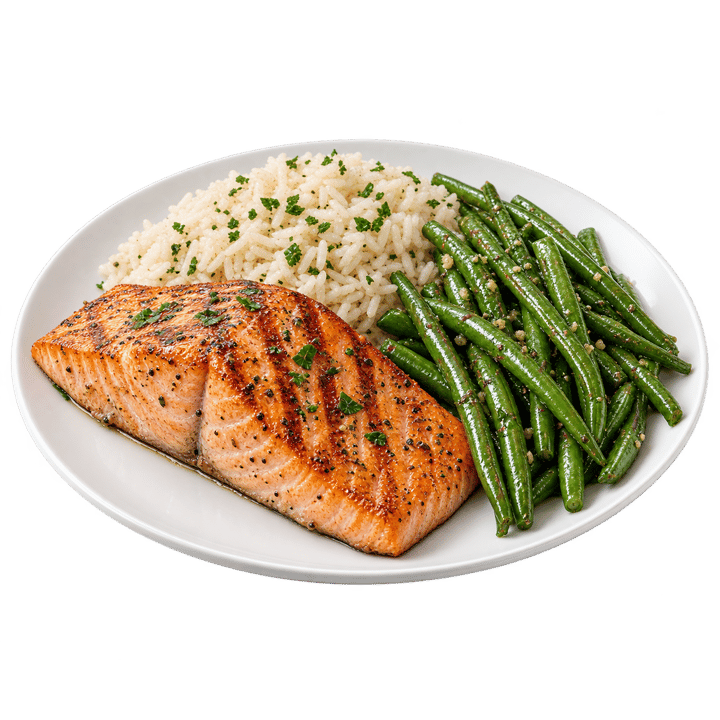
Processing: is processed food bad for you?
On this page
Keep at least 70% of each plate’s calories to food you could name, like chicken, beans, rice, eggs and fruit. Ultra-processed food is easy to eat too much of. In a 2019 NIH study people ate about 500 more calories a day on it, without trying. But processing is one of the six jobs a meal does, so a plate can be all whole food and still grade a C.
“Processed” covers almost everything you eat. Cheese, canned beans, frozen peas, olive oil and a loaf of bread are all processed, and most of them are fine. So people end up at one of two ends. Some think processing is the whole story, so anything from a box is bad and anything natural is good. Others think it’s a fussy worry, and only sugar, fat and calories count.
Both ends miss something. In the NIH study the meals put in front of people were matched for calories, sugar, fat, fiber and salt, and people still ate about 500 more calories a day on the ultra-processed ones. And a bowl of oatmeal with a banana is 100% whole food, but it has 7 g of protein, so it won’t hold you until lunch or do much for your muscles.
What we’d do
Build each plate from foods you could name, and let packaged staples like bread, cheese or a tortilla be the smaller part of it. When you cut back, cut the packaged things you eat between meals and with them first: sweet drinks, chips, cookies and pastries, deli meats and fast food sandwiches. Don’t worry about canned beans or frozen vegetables, which count as whole food on the checker. Then look at the other five meters, because a plate that’s all whole food can still be short on protein or far too big.
If you remember three things
- About 500 extra calories a day. That’s what 20 adults ate on ultra-processed meals at the NIH, without being told to eat more.
- More than half of what Americans eat. US adults get 53% of their calories from ultra-processed food.
- A little is fine, and it’s never the whole grade. The checker’s line lets 30% of a plate’s calories be ultra-processed, and Processing is one meter of six.
A simple way to picture it
Ultra-processed food is like an escalator, and whole food is like the stairs. Both get you to the same floor, but on the escalator you get there faster and don’t feel the climb, so it’s easy to ride up a few extra floors before you notice.
What counts as ultra-processed?
The usual system is called NOVA. It sorts food into four groups by how it was made: foods as they come (an egg, an apple, frozen peas), cooking ingredients (oil, butter, salt), processed foods made from those (cheese, canned tuna, fresh bread) and ultra-processed foods. The last group is made with things you’d never or rarely use in a kitchen, like high-fructose corn syrup, hydrogenated oils and hydrolysed proteins, or additives like flavors, colors, emulsifiers and sweeteners. The researchers who built NOVA give a quick test. Check the ingredient list, and if it has one item like that, the food is ultra-processed.
Some of the checker’s tags surprise people.
| Whole or lightly processed | Ultra-processed |
|---|---|
| Plain Greek yogurt | Fruit yogurt |
| Canned tuna, cheese, tofu | Deli turkey, sausage, chicken nuggets |
| Corn tortillas | Flour tortillas |
| Oatmeal | Corn flakes, granola |
| A baked potato | Fries |
| Olive oil and vinegar | Bottled ranch and Italian dressing |
Store-bought sliced bread is ultra-processed on NOVA, whole wheat included. Is bread ultra-processed? on processing.guide goes through which loaves are and which aren’t. Bread is a big reason the checker’s line sits at 30% instead of zero, since toast with your eggs shouldn’t sink a breakfast.
Processing is one job of six, never the grade
This is the part most food rules get wrong. How a food was made tells you a lot about how easy it is to overeat, and much less about whether the plate has protein, fiber, vitamins or the right size for your day. So in the Gyroscope app Processing is one meter on every meal’s grade, next to Energy, Muscle, Hunger, Nutrients and Glucose, and it never decides the grade on its own. The checker here works the same way.
Here’s what that looks like. The oatmeal is 100% whole food and the burger has store-bought bread, which makes 28% of its calories ultra-processed.


Oatmeal and a banana
1 cup oatmeal, 1 banana
250 calories, 7 g protein, 6.8 g fiber


A burger on whole wheat, with lettuce, tomato and onion
1⅓ palms ground beef, 2 slices whole wheat bread, 1 tomato, 1 cup salad greens, ¼ cup onion
490 calories, 36 g protein, 6.9 g fiber
The oatmeal clears Processing with a perfect score and still gets a C, because it’s light and short on protein, so Muscle and Hunger fall well short. The burger clears all six lines and gets an A. If Processing were the grade, you’d pick the oatmeal and be hungry by ten. processing.guide makes the same case in Processing isn’t the same thing as nutrition.

The NIH experiment
In 2019 a team at the National Institutes of Health led by Kevin Hall had 20 adults live at the NIH Clinical Center for 28 days. For two weeks they ate ultra-processed meals and for two weeks unprocessed ones, in random order. The meals offered were matched for calories, sugar, fat, fiber, salt and protein, and people could eat as much or as little as they wanted.
On the ultra-processed meals they ate about 508 more calories a day. They gained about 2 lb in two weeks, and lost about 2 lb on the unprocessed meals. They ate the ultra-processed meals faster, about 17 more calories a minute. The ultra-processed food was cheaper too, about $106 a week against $151 for the ingredients for 2,000 calories a day.
In 2025 a team in England ran a longer version. They delivered two 8-week diets to 55 adults, one minimally processed and one ultra-processed, both built to the UK’s healthy eating guide. People lost about 2% of their weight on the minimally processed diet and about 1% on the ultra-processed one. Both trials are small, but they controlled and weighed the food, and both found the same direction.
Why do people eat more of it?
Nobody knows the whole answer yet. Speed is one part. In the NIH study people ate faster on the ultra-processed diet, and the people whose eating sped up the most tended to eat the most extra. A lot of ultra-processed food is soft, dense and quick to chew, so more goes down before you feel full. Why ultra-processed food makes you eat more on processing.guide has the rest of the theories.
The other part is what it’s missing. Many ultra-processed foods are low in protein, fiber and water, the three things that keep you full, which is why the Hunger meter and this one so often fail together.
How much do Americans eat?
US adults got 53.0% of their calories from ultra-processed food between August 2021 and August 2023, and children and teens got 61.9%. The biggest sources for adults were sandwiches including burgers (8.6% of all calories), sweet bakery foods (5.2%), sweetened drinks (4.4%), savory snacks (3.4%) and breads, rolls and tortillas (3.1%).
The 2025 to 2030 US guidelines say to “Avoid highly processed packaged, prepared, ready-to-eat, or other foods that are salty or sweet, such as chips, cookies, and candy”. Most of the calories are in sandwiches and bakery foods, though, so that’s where a change does the most.
How the checker scores Processing
Every food in the meal checker carries its NOVA group. The Processing meter is the share of the plate’s calories that isn’t ultra-processed, so a plate of whole and lightly processed food scores 100 and a plate that’s all group 4 bottoms out at 1. The line is 70, which means up to 30% of the calories can be ultra-processed and the plate still clears it. Cheese, canned tuna, tofu and bacon are group 3 and count as fine.
Two eggs on two slices of store-bought whole wheat toast with butter is 35% ultra-processed, just past the 30% the line allows. Add a third egg and a cup of strawberries and the bread drops to 26% of the calories, and Processing clears. A fast food cheeseburger, fries and a soda is 100% ultra-processed and scores 1.
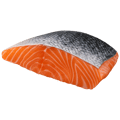 Salmon, a potato and green beans100% whole food100
 Bacon, two eggs and toast84% whole food84
 A burger on whole wheat72% whole food72
 Eggs and toast65% whole food65
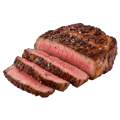 Steak, fries and a side salad54% whole food54
 A tuna sandwich and an apple44% whole food44
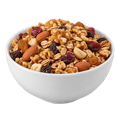 Greek yogurt, granola and honey40% whole food40
 Two slices of pizza and a side salad37% whole food37
 A burger, fries and a soda0% whole food1
Look at where the “healthy” breakfast lands. Greek yogurt is whole food, but the granola is ultra-processed and so dense that it’s most of the bowl’s calories. Swapping it for oatmeal changes Processing more than anything else you could do to that bowl.


Eggs and toast
2 eggs, 2 slices whole wheat bread, 1 tbsp butter
400 calories, 18 g protein, 3.8 g fiber
- Energylight400 cal
- Processingmixed65% whole food
- Musclevery low18 g protein
- Hungersome3.8 g fiber, 2.3 cal a gram
- Nutrientssome0 cups of plants
- Glucosesteady0 g fast carbs
The one changeAdd a cup of plain Greek yogurt and it's B

Three eggs, toast and strawberries
3 eggs, 2 slices whole wheat bread, 1 tbsp butter, 1 cup strawberries
520 calories, 25 g protein, 7.6 g fiber
- Energyfits520 cal
- Processingwhole74% whole food
- Musclelow25 g protein
- Hungerfilling7.6 g fiber, 1.4 cal a gram
- Nutrientsdense1 cup of plants
- Glucosesteady0 g fast carbs
The one changeAdd a cup of plain Greek yogurt and it's A
How Gyroscope shows processing
In the Gyroscope app, the Processing meter runs from 100 for whole food down to 1 for ultra-processed, and it sits on each meal’s grade with the other five. Photograph a meal and the app grades it with its own analysis, so its numbers won’t always match the checker’s. The checker is the free version, with every tag and line out in the open.
The best case against
NOVA has critics, and they have a point. It puts whole wheat bread and soda in the same group, and it judges a food by how it was made rather than what’s in it. Some ultra-processed foods, like a plain whole grain bread or a tub of plain yogurt with a thickener, fit fine in a good diet.
That’s why Processing is one meter of six and allows 30%. The Muscle, Nutrients and Glucose meters judge what’s in the food, and this one catches the thing those miss, which is how easy a plate is to overeat. The trials behind it are small, 20 people and 55, but the food was delivered and weighed in both. We think that’s enough to make “mostly food you could name” a rule, and not enough to make it the only rule.
6 sources
- Hall et al., Ultra-processed diets cause excess calorie intake and weight gain: an inpatient randomized controlled trial of ad libitum food intake, Cell Metabolism, 2019pmc.ncbi.nlm.nih.gov
- Dicken et al., Ultraprocessed or minimally processed diets following healthy dietary guidelines on weight and cardiometabolic health: a randomized, crossover trial, Nature Medicine, 2025doi.org
- Williams et al., Ultra-processed food consumption among youth and adults: United States, August 2021 to August 2023, NCHS Data Brief 536, August 2025cdc.gov
- Monteiro et al., Ultra-processed foods: what they are and how to identify them, Public Health Nutrition, 2019europepmc.org
- US Department of Agriculture and US Department of Health and Human Services, Dietary Guidelines for Americans, 2025 to 2030, January 2026cdn.realfood.gov
- Gebhardt and Thomas, Nutritive Value of Foods, USDA Agricultural Research Service, Home and Garden Bulletin 72, 2002 (the meal checker's food values)ars.usda.gov