Glucose: which meals spike your blood sugar?
On this page
Your blood sugar rises most after fast carbs: added sugar, anything sweet you drink (juice too) and starch with very little fiber, like white rice, white bread and bagels. Protein, fiber and fat on the same plate soften the rise. Keep added sugar to 10 g a meal, the line the 2026 US guidelines set, and put a protein and a vegetable next to the starch.
People look for sugar in dessert. But a dinner with no dessert can still have 37 g of it if there’s a can of soda next to the plate, and a breakfast of Greek yogurt, granola and honey has 29 g while tasting like health food. The bigger surprise is the rice. A cup of white rice has about 44 g of carbs past its fiber, which is more than the sugar in that can of soda, and it turns into blood sugar just as surely.
Sugar on its own is the wrong thing to watch. Your body cares how fast the carbs on a plate arrive and what’s beside them when they do.
What we’d do
Drink water, sparkling water or unsweetened tea and coffee with meals, since a sweet drink alone can be three or four meals’ worth of sugar. Keep fruit whole instead of juiced. When you have a starch, make it the less refined kind (beans, lentils, whole wheat pasta, oatmeal, corn tortillas) and never let it sit on the plate alone. Put a palm of protein and a fist of vegetables next to it, and eat those first when you can. Have dessert when you want it, and count it as the meal’s sugar.
If you remember three things
- 10 g of added sugar a meal. That’s about two and a half teaspoons, and the 2026 US guidelines’ line for one meal.
- Starch counts. A cup of white rice brings more fast carbs than a can of soda brings sugar.
- Never eat a fast carb alone. White rice with chicken, oil and a vegetable raised blood sugar about half as much as rice alone in a 2014 trial.
A simple way to picture it
Think of carbs as a crowd heading into a stadium. Sugar, juice and white starch are a crowd let through one wide gate all at once, and the stands fill in minutes. Protein, fiber and fat are turnstiles. The same crowd still gets in, but it takes longer, and nobody gets crushed at the front.
Where does the 10 grams come from?
The January 2026 US guidelines are the first to set a sugar line for a single meal. They say “no amount of added sugars or non-nutritive sweeteners is recommended”, and that “one meal should contain no more than 10 grams of added sugars.” The CDC repeats it for adults and teens. Snacks follow the FDA’s healthy claim limits instead, which for a yogurt is no more than 2.5 g of added sugar per ⅔ cup.
The guidelines also say what counts. Added sugar has many names on a label, including high-fructose corn syrup, cane sugar, dextrose, fruit juice concentrate, honey and molasses. And “Some foods and drinks, such as fruits and plain milk, have naturally occurring sugars,” which aren’t counted as added.
For scale, the CDC says a 12 ounce regular soda has “more than 10 teaspoons (about 42 grams)” of added sugar. That makes 10 g about two and a half teaspoons, and a can of soda nearly four meals’ worth. The CDC also says US adults averaged 17 teaspoons of added sugar a day in 2017 and 2018.
Where does the 10 grams go?
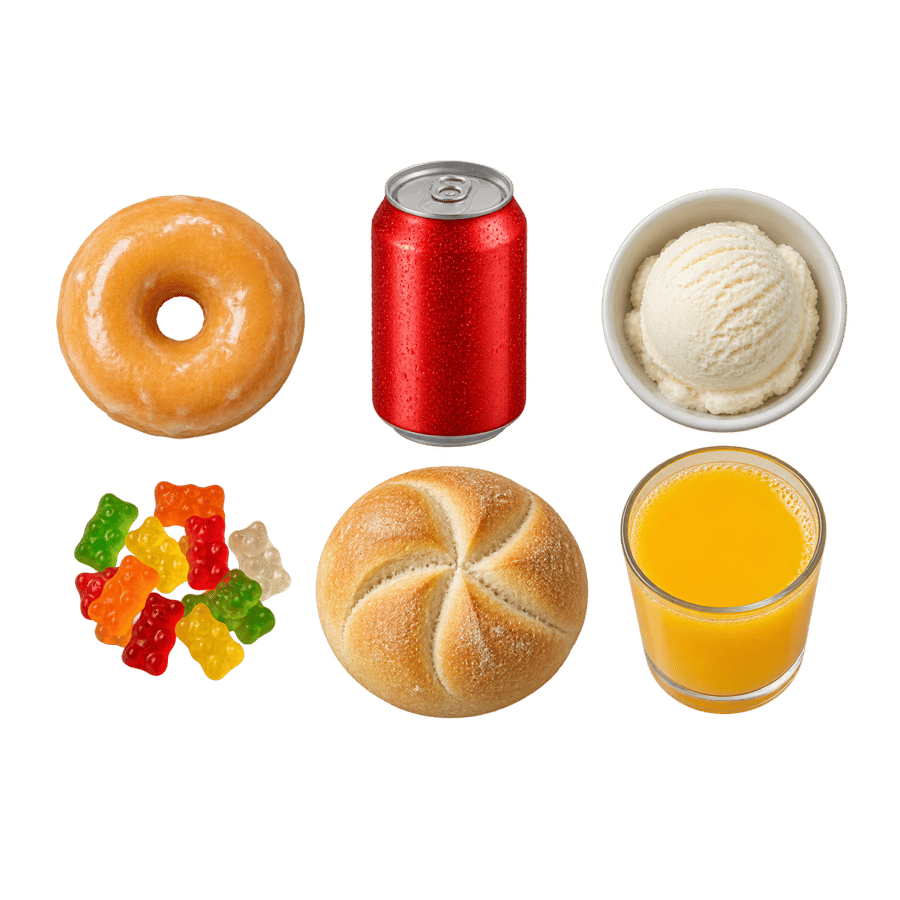
These are the values the meal checker uses. The USDA table it’s built on has no added sugar column, so for sweetened foods the checker counts all of their sugar as added, from USDA records, and for whole foods, fruit, juice and milk it counts none.
| Food | Amount | Sugar the checker counts |
|---|---|---|
| Fruit yogurt | An 8 oz cup | 43 g |
| Cola | A 12 oz can | 37 g |
| Sweet tea | 8 fl oz | 25 g |
| Blueberry muffin | One | 18 g |
| Honey | 1 tablespoon | 17 g |
| Doughnut | One medium | 14 g |
| Maple syrup | 1 tablespoon | 13 g |
| Granola | ¾ cup | 12 g |
| Barbecue sauce | 2 tablespoons | 11 g |
| Corn flakes | 1½ cups | 4 g |
| Ketchup | 1 tablespoon | 3 g |
The fruit yogurt number includes the milk’s own sugar, since the table can’t split it, so the added part is smaller than 43 g. It’s still well over 10.
Fast carbs and slow carbs
Sugar is only part of it, because starch is sugar too, just in chains your gut takes apart. What changes how fast is mostly the fiber that comes with it. Harvard researchers tested five ways of picking healthier grain foods on 545 products in two grocery chains, and the one that worked best was a simple ratio. Foods with no more than 10 g of total carbs for every gram of fiber had more fiber, less sugar and less sodium, and were far less likely to have trans fat.
The checker uses the same test to sort carbs. Here’s how foods from its table come out, as grams of carbs for each gram of fiber.
| Food | Carbs per gram of fiber | Counts as |
|---|---|---|
| White rice | 75 | Fast |
| Corn flakes | 30 | Fast |
| Bagel | 24 | Fast |
| White bread | 20 | Fast |
| Pasta | 17 | Fast |
| Brown rice | 13 | Fast, just |
| Baked potato | 11 | Fast, just |
| Corn tortilla | 9 | Slow |
| Whole wheat bread | 7 | Slow |
| Oatmeal | 6 | Slow |
| Whole wheat pasta | 6 | Slow |
| Black beans | 3 | Slow |
Brown rice surprises people. It has six times the fiber of white, but it still has 13 g of carbs for every gram, so on the checker’s Glucose meter it barely beats white rice. Beans, lentils and whole wheat pasta are the swaps that change the number. The 2026 guidelines point the same way, saying to “Significantly reduce the consumption of highly processed, refined carbohydrates, such as white bread, ready-to-eat or packaged breakfast options, flour tortillas, and crackers.”
Two groups get their own rule. Carbs you drink count as fast, juice included, since there’s nothing to chew and no fiber to slow them (milk is the exception, since it brings its own protein). And whole fruit counts as slow, since it comes with its fiber. The guidelines say 100% juice “should be consumed in limited portions or diluted with water”, and fruit has too much sugar covers why whole fruit isn’t the problem.
What goes beside the starch
In 2014 a team in Singapore gave 12 healthy adults a plate of white rice on its own, and on other days the same rice with chicken breast, with peanut oil, with a leafy vegetable, or with all three. Against pure glucose, the rice alone scored 96 on the glycemic index. With chicken it was 73, with the vegetable 82 and with the oil 67. With all three it was 50, about half the rise of the rice alone, and it didn’t take more insulin to get there.
The checker shows the same thing with the same foods.
 Black beans instead of the rice0 g fast carbs100
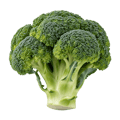 White rice, chicken, broccoli and olive oil44 g fast carbs79
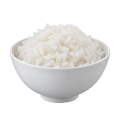 White rice and a palm of chicken44 g fast carbs62
- A cup of white rice44 g fast carbs0
Order helps too. In a 2015 trial, 11 people with type 2 diabetes ate the same meal twice, once with the bread and orange juice first and once with them 15 minutes after the chicken and vegetables. With the carbs last, their blood sugar was about 37% lower at an hour. Vegetables first, bread last has the whole trial, and the vegetables first calculator plots it.
How the checker scores Glucose
The Glucose meter is an estimate from the food, worked out in four steps.
- Fast carbs count in full. Added sugar, carbs in drinks, and the carbs past the fiber in any food over 10 g of carbs per gram of fiber. A food that brings its own protein, like milk or yogurt, doesn’t count as fast.
- Slow carbs count half. Beans, whole grains, whole fruit and vegetables still raise blood sugar, just less.
- Protein and fiber take some off. Every gram of protein or fiber on the plate takes 1% off, up to 40%.
- Then it scores the total two ways and keeps the worse. By grams, 15 g or less is 100 and 75 g or more is 0. By share, if more than 20% of the plate’s calories are fast carbs (after step 3) it starts to drop, and at 60% it’s 0. The share check is what catches a doughnut or a bowl of cereal, which are small but almost all fast carbs.
The line is 70. Here’s how common meals come out.
- Chicken, black beans and broccoli0 g fast carbs100
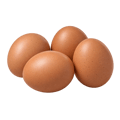 Eggs and toast0 g fast carbs100
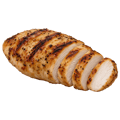 Chicken, rice and broccoli44 g fast carbs79
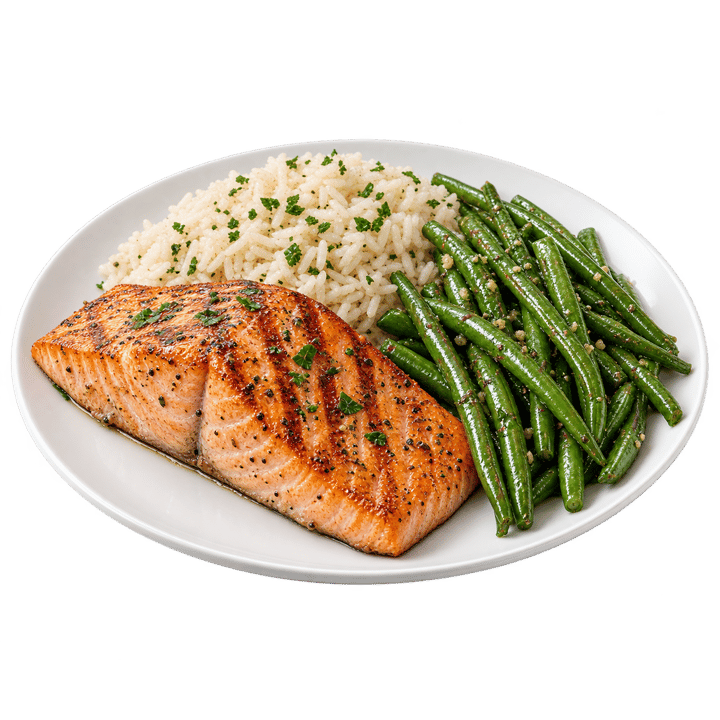
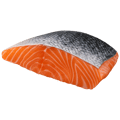 Salmon, a potato and green beans46 g fast carbs75
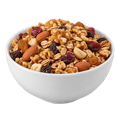 Greek yogurt, granola and honey49 g fast carbs61
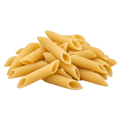 Spaghetti with meat sauce75 g fast carbs46
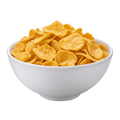 Cereal and milk35 g fast carbs39
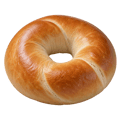 A bagel with butter46 g fast carbs32
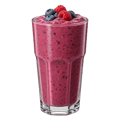 A fruit smoothie with juice and honey54 g fast carbs14
The spaghetti is a good example of the size of a starch mattering. Two cups of white pasta is a lot of fast carbs even with a palm of beef on top. Make it whole wheat pasta and the meter clears its line, or make it one cup of pasta with a cup of broccoli beside it.
One orange, two ways
Here’s the same dinner with the same orange, once squeezed and once whole.


Chicken, rice and broccoli, with orange juice
1 palm chicken breast, 1 cup white rice, 1 cup broccoli, 1 tbsp olive oil, 1 cup orange juice
620 calories, 38 g protein, 5.6 g fiber
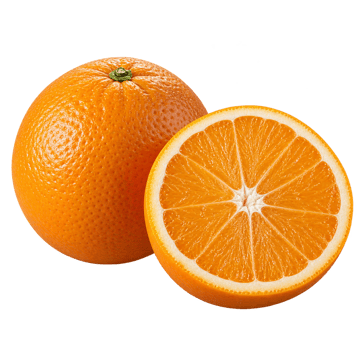
Chicken, rice and broccoli, with an orange
1 palm chicken breast, 1 cup white rice, 1 cup broccoli, 1 tbsp olive oil, 1 orange
570 calories, 37 g protein, 8.2 g fiber
The juice adds about 25 g of carbs you drink, all of them fast, and it pushes Glucose under its line. The whole orange brings fiber and counts as a cup of plants, and the plate is an A.
A sweet drink does the most damage to a good plate. Salmon, a potato and green beans is an A on its own. Put a can of soda next to it and Glucose drops well under the line.


Salmon, a potato and green beans, with a soda
1 palm salmon, 1 baked potato, 1 cup green beans, 1 tbsp butter, 12 fl oz cola
700 calories, 30 g protein, 8.8 g fiber
- Energyfits700 cal
- Processingwhole78% whole food
- Musclehigh30 g protein
- Hungerfilling8.8 g fiber, 1.6 cal a gram
- Nutrientsdense2 cups of plants
- Glucosea spike84 g fast carbs
The one changeSwap the soda for water and it's A
How Gyroscope tracks glucose
In the Gyroscope app the Glucose meter is a stability score, and above 70 counts as steady. The checker uses the same line, but it works the number out its own way from the food table, so the two won’t always match.
Do sweeteners get around it?
Diet soda has no sugar, so it doesn’t count against the 10 g. The 2026 guidelines also say to limit foods with “low-calorie non-nutritive sweeteners”, and they don’t recommend any amount of them. Water and unsweetened tea or coffee are the drinks that pass every version of the rule.
The best case against
People respond differently to the same food. In a 2015 study, researchers put glucose sensors on 800 people for a week and measured their response to 46,898 meals, and they found “high variability in the response to identical meals.” So any meter built from the food, including this one, is an average. A rise after a meal is also normal, and glucose.guide explains why every spike isn’t a problem.
That’s fair, and it’s why the meter is one of six and the app can show your real curve. But the averages point the same way for nearly everyone. Sweet drinks, white starch eaten alone and big portions of refined carbs raise blood sugar more than the same calories as beans, vegetables and protein. If you want the full story of how meals make hills, why meals make hills on glucose.guide has it.
8 sources
- US Department of Agriculture and US Department of Health and Human Services, Dietary Guidelines for Americans, 2025 to 2030, January 2026cdn.realfood.gov
- CDC, Get the Facts: Added Sugars, April 2026cdc.gov
- CDC, Rethink Your Drink, March 2026cdc.gov
- Mozaffarian et al., Identifying whole grain foods: a comparison of different approaches for selecting more healthful whole grain products, Public Health Nutrition, 2013stacks.cdc.gov
- Sun et al., Effect of chicken, fat and vegetable on glycaemia and insulinaemia to a white rice-based meal in healthy adults, European Journal of Nutrition, 2014europepmc.org
- Shukla et al., Food order has a significant impact on postprandial glucose and insulin levels, Diabetes Care, 2015pmc.ncbi.nlm.nih.gov
- Zeevi et al., Personalized nutrition by prediction of glycemic responses, Cell, 2015europepmc.org
- Gebhardt and Thomas, Nutritive Value of Foods, USDA Agricultural Research Service, Home and Garden Bulletin 72, 2002 (the meal checker's food values)ars.usda.gov