Healthy meal tips, studies and resources
Every tip and study on this site, each in one line you can pass on. Tap Copy and it goes in a message with its link.
Tips to pass on
-
If you can, get your vitamins from meals instead of pills, since food brings protein, fiber and fullness with them.
-
A good meal does six jobs, from the right size and enough protein to staying power and steady blood sugar, and an A plate clears all six.
-
At 170 lb and three meals a day, aim for about 30 to 40 g of protein a plate, breakfast included.
-
Swap the white rice for black beans and a chicken and broccoli plate goes from a B+ to an A+.
-
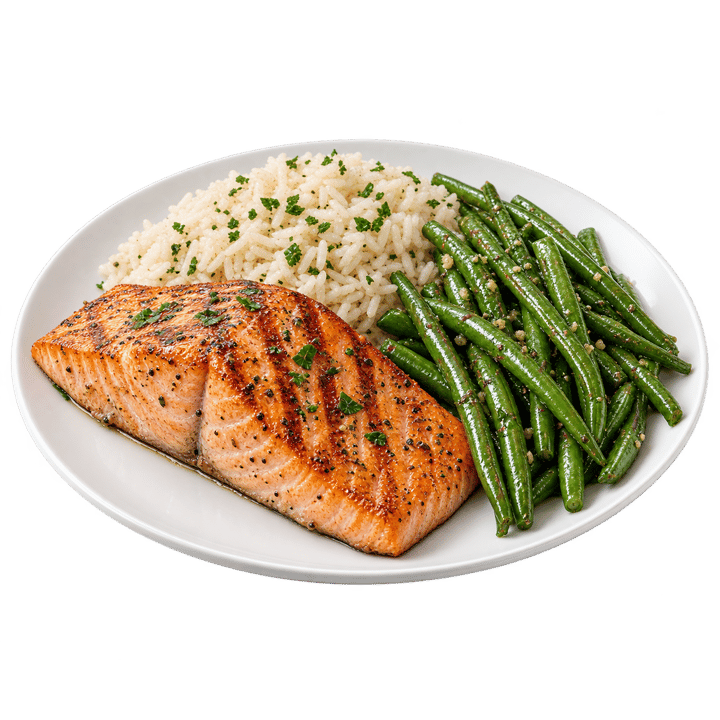
A soda takes a salmon, potato and green bean dinner from an A to a C+.
-
Two palms of chicken and white rice is lots of protein and still a B. A cup of broccoli next to it makes it an A.
-
Three spoons of bottled ranch add about 190 calories to a salad. Half a spoon of olive oil adds about 60.
-
Breakfast is the meal most often short on protein. A cup of plain Greek yogurt adds 17 g for 100 calories.
-
The 2026 US guidelines say one meal should have no more than 10 g of added sugar, about two and a half teaspoons.
-
Eat the vegetables and protein first and the bread last. In a small trial, blood sugar an hour later was 37% lower.
-
The most ordered restaurant meals averaged about 1,200 calories in a study of 364 of them, so box half.
-
Frozen and canned vegetables with little or no added sugar count, and the 2026 US guidelines list them as good options.
-
A palm is about 3 oz of meat or fish, a fist is about a cup, and a thumb tip is about a tablespoon.
-
A short rotation of A plates you can cook without a recipe does more than fifty saved ideas. The chicken and black bean plate is 530 calories.
The studies
Protein at every meal
-
2014. The same protein split evenly over three meals built about 25% more muscle over a day than eating most of it at dinner.
Mamerow and others, 8 adults, Journal of Nutrition
-
2015. A 35 g protein breakfast for 12 weeks cut how much they ate over the day, and they gained no bodyfat while the skippers gained about 3.5 lb.
Leidy and others, 57 young people who skipped breakfast, Obesity
-
2018. To build muscle, aim for about 0.4 g of protein per kg at each of at least four meals, and up to 0.55.
Schoenfeld and Aragon, a review, Journal of the International Society of Sports Nutrition
-
2023. After a full-body workout, 100 g of milk protein kept muscle building going for more than 12 hours, longer and more than 25 g.
Trommelen and others, 36 young men, Cell Reports Medicine
What keeps you full
-
1995. At the same 240 calories, boiled potatoes kept people about seven times fuller than a croissant.
Holt and others, 38 foods, European Journal of Clinical Nutrition
-
2009. People tend to eat about the same weight of food at a meal, so food with fewer calories per gram fills them for fewer calories.
Rolls, a review, Physiology and Behavior
Processing
-
2019. Offered meals matched for calories, sugar, fat, fiber and salt, people ate about 500 more calories a day when the meals were ultra-processed.
Hall and others, 20 adults at the NIH, Cell Metabolism
-
2025. On two 8-week diets built to the same healthy eating guide, people lost about 2% of their weight on minimally processed food and about 1% on ultra-processed.
Dicken and others, 55 adults in England, Nature Medicine
-
2025. US adults got 53% of their calories from ultra-processed food in 2021 to 2023, and children and teens got 62%.
Williams and others, NCHS Data Brief 536
Blood sugar and fiber
-
2015. The same meal with the bread and juice eaten last had blood sugar 37% lower an hour later.
Shukla and others, 11 adults with type 2 diabetes, Diabetes Care
-
2014. White rice eaten with chicken, oil and a leafy vegetable raised blood sugar about half as much as the rice alone.
Sun and others, 12 healthy adults in Singapore, European Journal of Nutrition
-
2019. People who ate the most fiber had a 15 to 30% lower risk of dying from any cause or from heart disease than people who ate the least.
Reynolds and others, 185 studies and 58 trials, The Lancet
Eating out
-
2016. The most ordered meals averaged about 1,200 calories, and 92% had more than a typical woman needs at one meal.
Urban and others, 364 restaurant meals in three US cities, Journal of the Academy of Nutrition and Dietetics
Why the body needs supplies
-
1747. Of six remedies, two oranges and a lemon a day worked best, and one sailor was fit for duty in six days.
James Lind, 12 sailors with scurvy on the Salisbury
-
2011. Our primate ancestors lost the working gene for making vitamin C about 61 million years ago, so ours has to come from food.
Drouin, Godin and Pagé, Current Genomics
-
2006. Animals lost the ability to make some amino acids once their food brought them in ready-made.
Payne and Loomis, Eukaryotic Cell
-
2022. The evidence is too thin to say whether multivitamins prevent heart disease or cancer in healthy adults, and beta carotene and vitamin E pills are not recommended for it.
US Preventive Services Task Force
Resources
-
Dietary Guidelines for Americans, 2025 to 2030 The US guidelines from January 2026, ten pages long, with protein at every meal and a sugar line for one meal.
USDA and US Department of Health and Human Services
-
Daily Servings by Calorie Level How many servings of vegetables, fruit, dairy and the rest at each calorie level.
Dietary Guidelines for Americans, 2025 to 2030
-
Diabetes Meal Planning The plate method and the hand measures this site uses for portions.
CDC
-
Daily Value on the Nutrition and Supplement Facts Labels The Daily Values the meal checker counts minerals and vitamins against.
US Food and Drug Administration
-
Nutritive Value of Foods, Home and Garden Bulletin 72 The food table behind the meal checker, with calories, protein, fiber, minerals and vitamins for everyday foods.
USDA Agricultural Research Service
-
FoodData Central Look up any food the checker doesn't have.
USDA Agricultural Research Service