You can't get a healthy meal at a fast food place
Short answerSort of
On this page
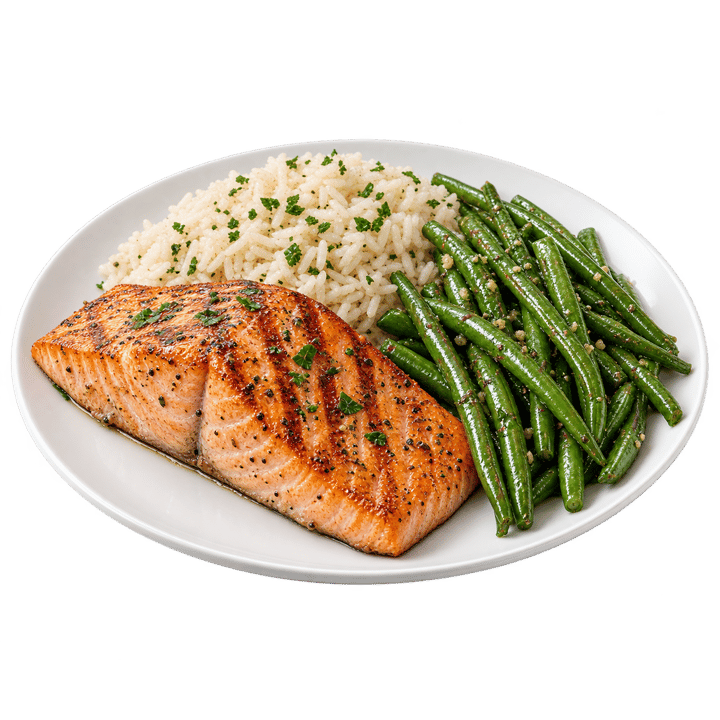
Sort of. The default combo, a cheeseburger, fries and a soda, grades D on the meal checker. A bowl with chicken, black beans, brown rice and salsa grades A, and so does a grilled chicken salad with beans and corn. Most fast food menus have both, and you have to order off the default to get the good one.
What we’d do
At a counter, build the order instead of picking a number off the board. Get a grilled protein, a vegetable side or a salad in place of fries, and water in place of soda. If the place does bowls, build one with a protein, beans, vegetables and salsa, and go easy on the cheese and sour cream. Use the posted calories to keep it inside your plate window.
If you remember three things
- The default combo grades D. 740 calories, 41 g of added sugar and no vegetables, and it clears only one of the six meters.
- A built bowl grades A. About 440 calories, 41 g of protein and 11 g of fiber.
- One swap lifts it a letter. Water for the soda, or a cup of broccoli for the fries, takes the same combo from D to C.
Why people believe it
Fast food means burgers, fries and soda to most people, and that order deserves its reputation. Sandwiches, burgers included, are the biggest single source of ultra-processed calories in the US adult diet, at 8.6% of everything adults eat. Sweetened drinks are third.
It’s also a big part of how Americans eat. On a given day between 2013 and 2016, 36.6% of US adults ate fast food, and 44.9% of adults aged 20 to 39. A rule that writes off a meal more than a third of adults eat on any given day isn’t much use to them.
The sit-down restaurant isn’t automatically the better choice either. When Tufts researchers measured 364 popular meals from local restaurants in 2016, they averaged about 1,200 calories, and the matching meals from big chains weren’t meaningfully different.
A simple way to picture it
A fast food menu works like a hardware store. You can build a solid bookshelf or a wobbly one from the same aisles, and the kit stacked at the front of the store is the wobbly one. The combo is the kit.
Four orders, graded
These are graded on the meal checker for a 170 lb person eating 2,000 calories over three meals, on the six systems Gyroscope grades a meal on. A plate that fits this person’s day is 500 to 830 calories.


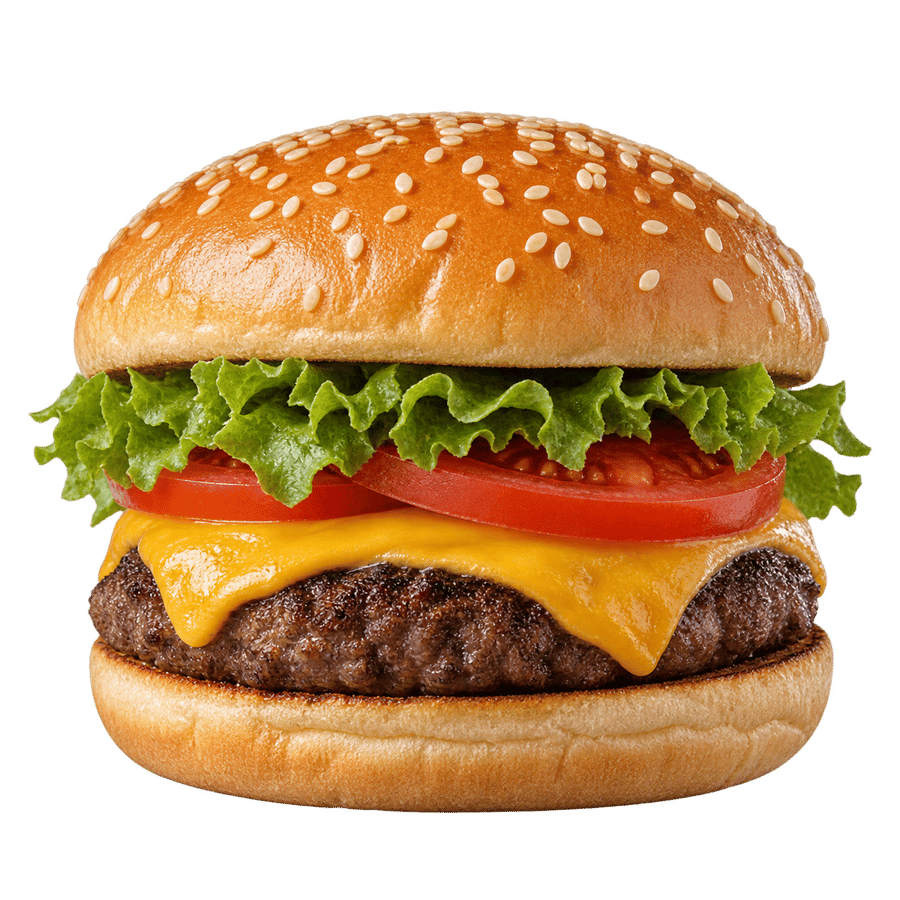
Cheeseburger, small fries, 12 oz soda
1 sandwich cheeseburger, 1 small order of french fries, 12 fl oz cola
740 calories, 20 g protein, 3 g fiber
- Energyfits740 cal
- Processingprocessed0% whole food
- Musclevery low20 g protein
- Hungerlight3 g fiber, 3.7 cal a gram
- Nutrientslow0 cups of plants
- Glucosea spike73 g fast carbs
The one changeSwap the fries for a cup of broccoli and it's C



Two hamburgers, a side salad, water
2 sandwichs hamburger, 2 cups salad greens, ½ tomato
570 calories, 27 g protein, 7.3 g fiber
- Energyfits570 cal
- Processingprocessed5% whole food
- Musclelow27 g protein
- Hungerfilling7.3 g fiber, 1.5 cal a gram
- Nutrientsdense1½ cups of plants
- Glucosea rise63 g fast carbs
The one changeAdd half a cup of black beans and it's C


A bowl you build
1 palm chicken breast, ½ cup black beans, ½ cup brown rice, 1 cup salad greens, 2 tbsp salsa, ½ oz cheddar cheese
430 calories, 41 g protein, 10.8 g fiber
- Energylight430 cal
- Processingwhole100% whole food
- Musclehigh41 g protein
- Hungerfilling10.8 g fiber, 1.2 cal a gram
- Nutrientsdense1 cup of plants
- Glucosesteady21 g fast carbs
The one changeAdd a cup of broccoli and it's A+

Grilled chicken salad with beans and corn
3 cups salad greens, 1 palm chicken breast, 1 tomato, ½ cup corn, ½ cup black beans, 2 tbsp italian dressing
510 calories, 41 g protein, 13.9 g fiber
- Energyfits510 cal
- Processingwhole73% whole food
- Musclehigh41 g protein
- Hungerfilling13.9 g fiber, 0.9 cal a gram
- Nutrientsdense3½ cups of plants
- Glucosesteady2 g fast carbs
The one changeSwap the bottled dressing for a spoon of olive oil and vinegar and it's A+
The combo with water instead of soda is a C. A fried chicken sandwich, small fries and a soda is a D, and at about 960 calories it’s also bigger than the plate window. A loaded bowl with a cup each of white rice and black beans, chicken, cheese, sour cream and avocado comes to nearly 900 calories and a B. Half the rice makes it an A.
Why the bowl wins
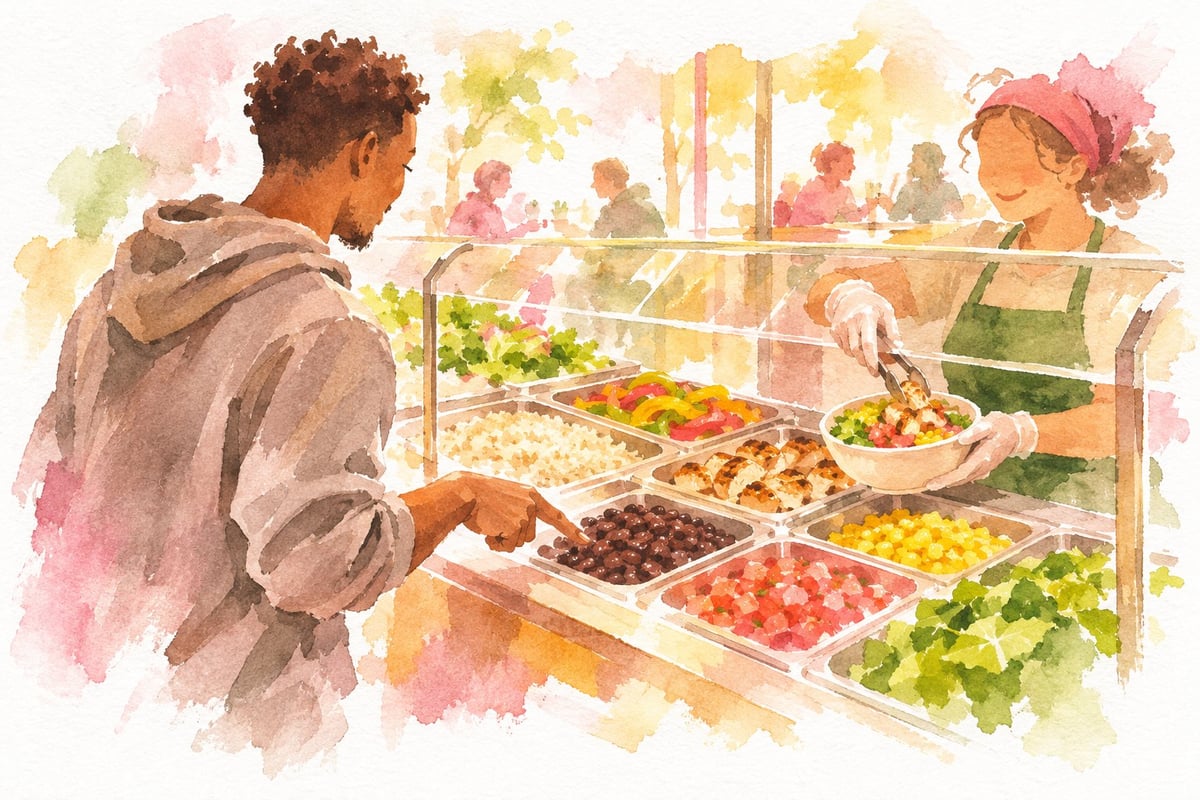
A bowl lets you pick every part, and most of the parts are foods you could name, like chicken, beans, rice, lettuce and salsa. A sandwich comes as one item, and on the checker a fast food burger or chicken sandwich counts as ultra-processed as a whole, bun and all. So a plate built around one can never clear the Processing meter, and a plate that misses a meter can’t be an A. The two hamburgers do fine on Hunger and Nutrients, thanks to the salad, and still land on a C. A bowl or a grilled chicken salad can clear all six.
The 2025 to 2030 US guidelines say “When dining out, choose nutrient-dense options”, and to swap deep-fried food for “baked, broiled, roasted, stir-fried, or grilled”. At a counter, that means grilled over crispy.
The best case for the belief
The belief is right about the default menu, and the default is what most people order. On the checker, the cheeseburger combo clears only one of the six meters, Energy, because 740 calories fits the day. It misses Processing, Muscle, Hunger, Nutrients and Glucose. The checker also doesn’t count salt. If a person’s only fast food is the combo, “fast food is unhealthy” is a fair summary.
Since May 2018, chains with 20 or more locations have had to post calories on their menus. That makes the good order easier to find than it’s ever been. What to order when you eat out has the five rules for any counter, and the burger that beat the salad has the other side of the story.
6 sources
- Fryar et al., Fast food consumption among adults in the United States, 2013 to 2016, NCHS Data Brief 322, October 2018cdc.gov
- Williams et al., Ultra-processed food consumption among youth and adults: United States, August 2021 to August 2023, NCHS Data Brief 536, August 2025cdc.gov
- Urban et al., Energy contents of frequently ordered restaurant meals and comparison with human energy requirements and US Department of Agriculture database information: a multisite randomized study, Journal of the Academy of Nutrition and Dietetics, 2016pmc.ncbi.nlm.nih.gov
- US Food and Drug Administration, Menu labeling requirementsfda.gov
- US Department of Agriculture and US Department of Health and Human Services, Dietary Guidelines for Americans, 2025 to 2030, January 2026cdn.realfood.gov
- Gebhardt and Thomas, Nutritive Value of Foods, USDA Agricultural Research Service, Home and Garden Bulletin 72, 2002 (the meal checker's food values)ars.usda.gov