What does a healthy plate look like?
On this page
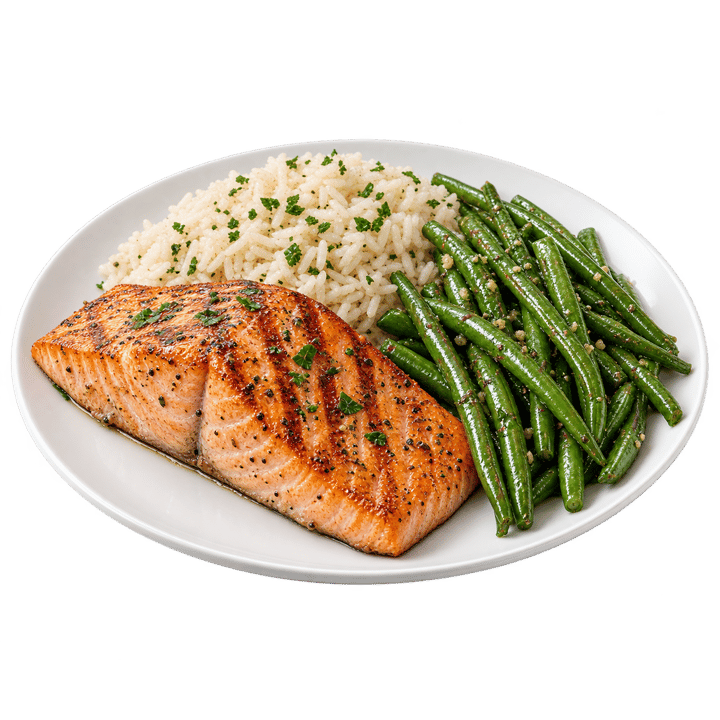
Half vegetables and fruit, a quarter protein and a quarter starch still works as a picture. The catch is that most plates people call healthy fall short on protein, not on vegetables. Make the protein quarter a real palm, about 3 oz of meat or fish, and the picture holds up.
Ask someone to picture a healthy meal and you’ll usually get a big salad, a grain bowl or a plate of roasted vegetables. They look right. They’re colorful and full of plants. But put them through a meal checker and a pattern shows up fast. The vegetables are fine and the protein is missing.
We’d draw the plate in this order: protein first, then vegetables, then the starch, then the fat. If the palm goes on first, the rest of the plate tends to sort itself out. The new US food guide at realfood.gov agrees that “protein and vegetables form the foundation of real food meals.”
A big plate of vegetables with no protein is like a fire made of newspaper. It’s bright and fast, and you’re cold again in an hour.
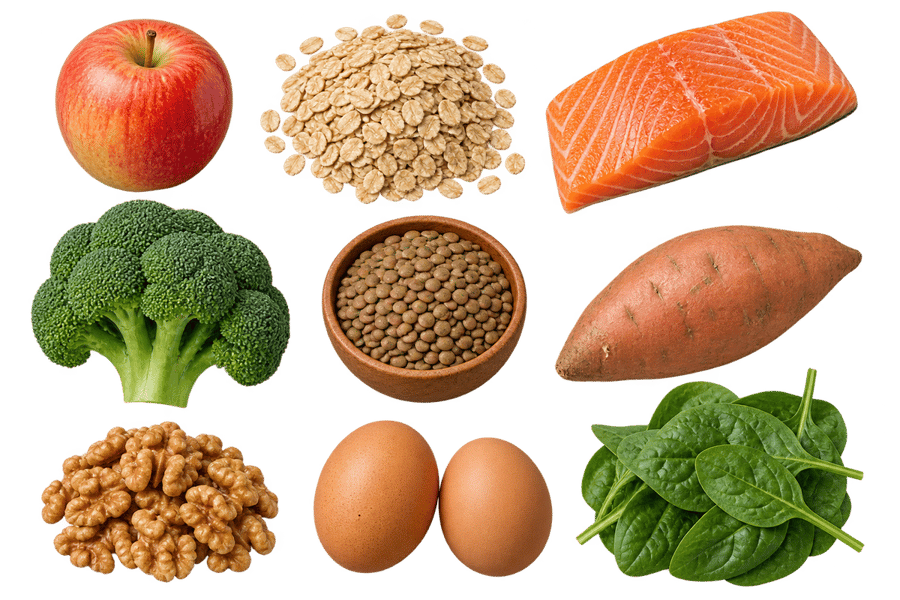
Plates that look healthy and miss
For a 170 pound person on 2,000 calories over three meals, the protein line is 30 g a plate.
| Plate | Protein | Grade | The fix |
|---|---|---|---|
| A big salad with tomato, cucumber, carrots and olive oil | 5 g | C | Add a palm of chicken: A |
| A vegetable stir fry over brown rice, no meat or tofu | 15 g | C+ | Add half a block of tofu: A |
| Oatmeal and a banana | 7 g | C | Add a cup of plain Greek yogurt: B |
| Greek yogurt and blueberries | 18 g | C, and it’s small | Add a handful of almonds and a banana: B+ |
The stir fry is the interesting one. It’s full of vegetables, with almost 14 g of fiber, so it looks like the healthiest plate on the table. But with 15 g of protein it misses Muscle and Hunger, and the brown rice is its biggest scoop, so it misses Glucose too. Half a block of tofu fixes all three at once, since protein also slows the carbs down. Plates like this are why we grade meals on six jobs instead of asking if they’re healthy.
Why protein is the part that goes missing
American adults tend to load their protein onto dinner. Researchers tested what that does in 2014. Eight adults ate about 90 g of protein a day for a week, once split evenly (about 30 g at each meal) and once skewed toward dinner (about 10 g at breakfast, 15 g at lunch and 65 g at dinner). Muscle building over 24 hours was about 25% higher on the even split. It was only eight people. And in a 1995 test of 38 foods, the ones with more protein kept people fuller.
What’s the plate method?
The plate method comes from diabetes care. The CDC’s version says to start with a 9 inch plate, fill half with non-starchy vegetables like salad, green beans and broccoli, a quarter with lean protein like chicken, beans, tofu or eggs, and a quarter with carbohydrate foods. It works for almost anyone as a picture. The one thing we’d change is the size of that protein quarter. A palm of chicken or fish is 23 to 27 g of protein, and a spoonful of beans is a lot less.
How to check yours
Put your plate in the meal checker. If Muscle is the meter it misses, the one change it suggests will usually be adding a palm of chicken, a couple of eggs or a cup of Greek yogurt. Muscle: protein on every plate has the amounts, and A+ meals, graded has plates that get it right.
5 sources
- Centers for Disease Control and Prevention, Diabetes Meal Planning, May 2024cdc.gov
- US Department of Health and Human Services and US Department of Agriculture, The New Pyramid, realfood.gov, 2026realfood.gov
- Mamerow et al., Dietary protein distribution positively influences 24-h muscle protein synthesis in healthy adults, Journal of Nutrition, 2014pmc.ncbi.nlm.nih.gov
- Holt et al., A satiety index of common foods, European Journal of Clinical Nutrition, 1995europepmc.org
- Gebhardt and Thomas, Nutritive Value of Foods, Home and Garden Bulletin 72, USDA Agricultural Research Service, 2002ars.usda.gov