What should a meal look like to lose weight?
On this page
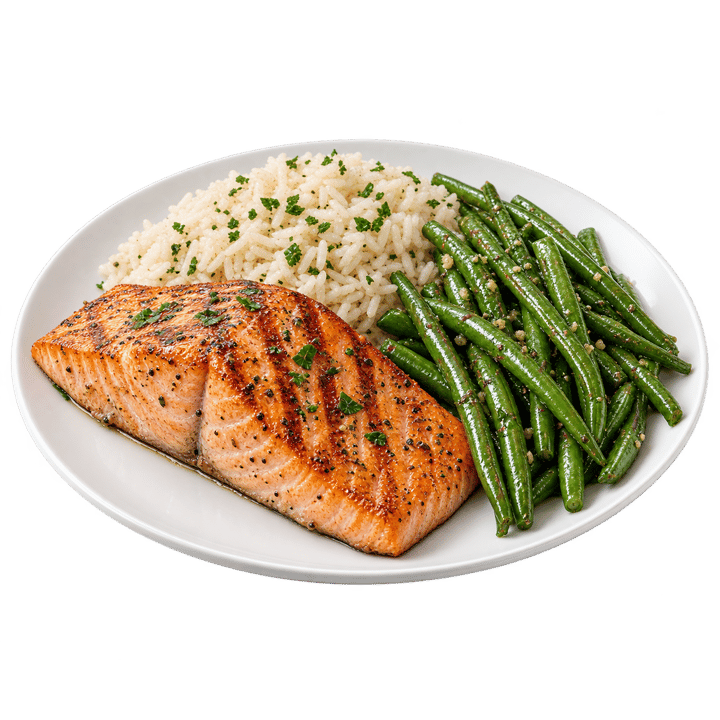
The same balanced plate, a size smaller. Keep the palm of protein and the fist or two of vegetables, and shrink the starch and the fat. Size each plate from your target day: on 1,600 calories over three meals, that’s 400 to 670 calories a plate.
When people start a diet, the plate usually changes shape in the wrong direction. The protein shrinks to a few slices of chicken on a salad, the meal turns into a 300 calorie frozen dinner, or breakfast becomes coffee. None of those keep anyone full for long.
We’d keep the plate’s structure and change its size. Protein and vegetables stay the same, because they’re what keep you full. The rice, bread, pasta, oil and butter get smaller, because that’s where the calories pile up. A cup of rice has about 205 calories, a tablespoon of oil about 120, and a cup of broccoli about 45.
Losing weight on a smaller plate is like moving to a smaller apartment. You keep the bed and the kitchen table, and you get rid of the extra furniture.
Why the protein and vegetables stay
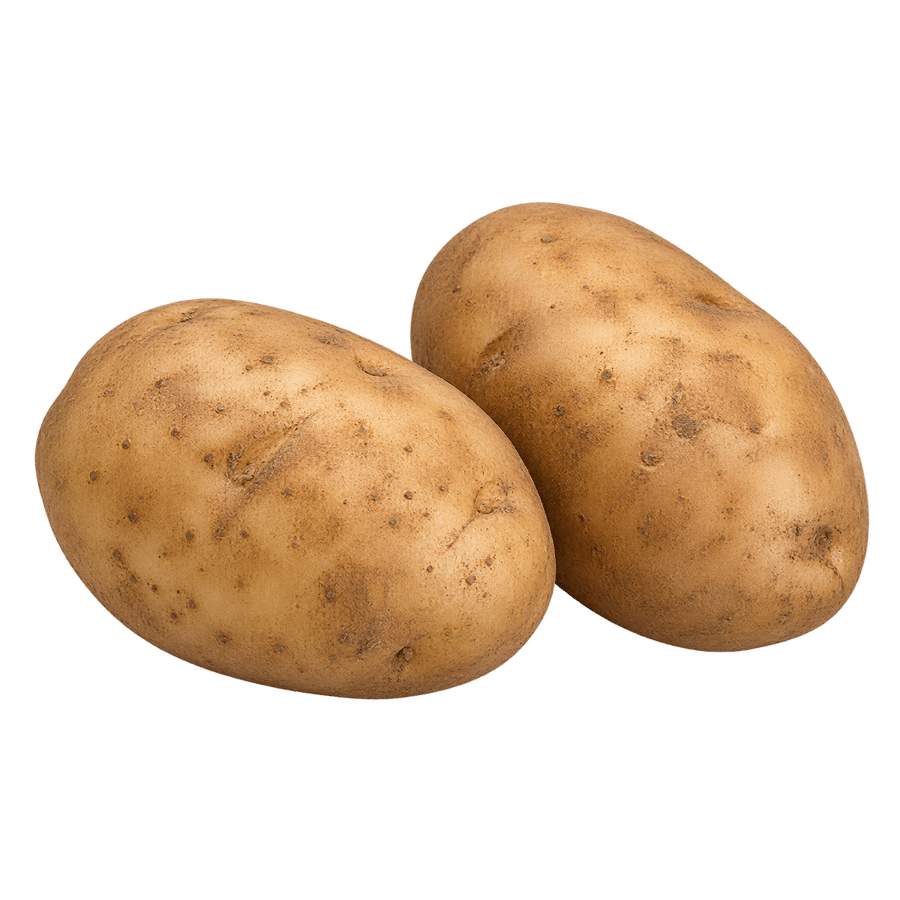
In 1995, Australian researchers fed people 38 everyday foods in 240 calorie portions and rated how full they felt every 15 minutes for two hours. Boiled potatoes kept people about seven times fuller than a croissant. Across all 38 foods, protein, fiber and water went with more fullness, and fat went with less.
Processing pushes the other way. In a 2019 NIH study, 20 adults ate about 500 more calories a day on ultra-processed meals than on unprocessed meals offering the same nutrients, and gained about 2 pounds in two weeks. On the unprocessed meals they lost about 2 pounds without trying to.
The same plates on a smaller day
Take a 170 pound person eating 1,600 calories a day over three meals. The window is 400 to 670, and the protein line stays 30 g, since it’s set by body weight, not calories.
| Plate | Calories | Grade |
|---|---|---|
| Salmon, a baked potato, green beans and butter | 550 | B+ |
| Chicken, a cup of white rice and broccoli | 510 | B+ |
| Chicken, half rice and half black beans, broccoli | 520 | A |
| Burrito bowl: chicken, rice, beans, salsa, cheese, sour cream, lettuce | 695 | B+, over the window |
| The same bowl with half the rice, peppers and onions, no sour cream, with or without cheese | 480 to 590 | A or A+ |
Most good plates already fit the window, which is the Energy job. What changes on a smaller day is Nutrients. Each plate is a bigger share of 1,600 calories than of 2,000, so it has to bring a bigger share of the day’s minerals and vitamins too, and the plates built on a potato or white rice slip a little, to a B+. Beans in place of half the rice fix that, and cutting the rice in half or dropping one rich topping brings the bowl back inside the window. Those are the kinds of change our meal checker suggests.
How small is too small?
The 2013 US obesity guideline’s weight-loss diets usually ran 1,200 to 1,500 calories a day for women and 1,500 to 1,800 for men. We’d stay at or above those floors unless a doctor is running your plan. tdee.guide has the details. Protein shouldn’t drop either. The 2025 to 2030 US guidelines set 1.2 to 1.6 g per kg of body weight a day, and losing weight is when muscle needs it most (bodyfat.guide explains).
What to do
- Find your target day at tdee.guide, then your plate window with the plate size calculator.
- Keep a palm of protein and a fist or two of vegetables on every plate.
- Halve the starch, or swap half of it for beans.
- Measure the oil. A tablespoon is about 120 calories.
- Choose food you could name over packaged diet food.
High protein low calorie meals has eight plates with 30 g of protein or more for under 360 calories, graded on all six.
5 sources
- Hall et al., Ultra-processed diets cause excess calorie intake and weight gain: an inpatient randomized controlled trial of ad libitum food intake, Cell Metabolism, 2019pmc.ncbi.nlm.nih.gov
- Holt et al., A satiety index of common foods, European Journal of Clinical Nutrition, 1995europepmc.org
- Jensen et al., 2013 AHA/ACC/TOS guideline for the management of overweight and obesity in adults, Circulation, 2014europepmc.org
- US Department of Agriculture and US Department of Health and Human Services, Dietary Guidelines for Americans, 2025 to 2030, January 2026cdn.realfood.gov
- Gebhardt and Thomas, Nutritive Value of Foods, Home and Garden Bulletin 72, USDA Agricultural Research Service, 2002ars.usda.gov