What should a plate look like with type 2 diabetes?
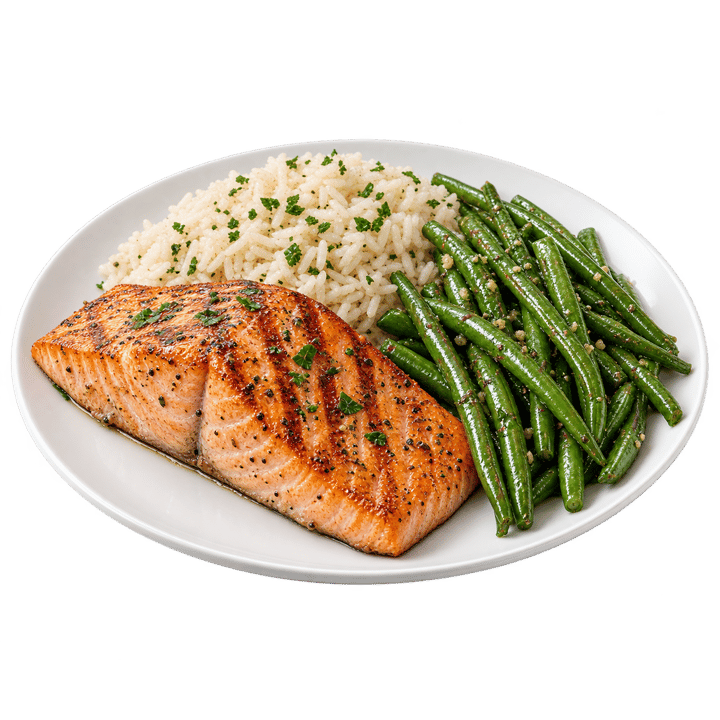
Use the diabetes plate: a 9 inch plate with half non-starchy vegetables, a quarter lean protein and a quarter carbohydrate foods, with water to drink. Your care team sets your carb targets. Eating the vegetables and protein before the carbs can also lower the rise in blood sugar after the meal.
A diagnosis often comes with a list of foods to avoid, and people start cutting whole groups: no bread, no fruit, no potatoes. The plate takes a different approach. It keeps every kind of food and limits how much space the carbohydrate foods get.
The American Diabetes Association calls its version “the easiest way to create healthy low-carb meals,” and says you can build one “without any counting, calculating, weighing, or measuring.” The CDC teaches the same layout, starting with a plate “about the length of a business envelope.”
We’d use the diabetes plate with two additions: make the protein quarter a real palm, and eat the carbs last when you can.
The lines on the plate work like the lines in a parking lot. You don’t need to count the cars, because the spaces do it for you.
What goes in each part?
| Part | What goes there | Examples |
|---|---|---|
| Half | Non-starchy vegetables | Salad, green beans, broccoli, spinach, carrots, peppers, mushrooms |
| A quarter | Lean protein | Chicken, fish, eggs, tofu, beans |
| A quarter | Carbohydrate foods | Brown rice, a potato with the skin, whole grain bread, beans, fruit |
| The drink | Water or a zero-calorie drink | Water, sparkling water, unsweetened tea |
Beans can sit in either quarter, since they have protein and carbohydrate. Potatoes and corn go in the carb quarter here, even though the US serving table counts them as vegetables.
How does it grade?
We built one in our meal checker: a palm of chicken, a cup of broccoli, two cups of salad, half a cup of brown rice and a tablespoon of olive oil. It comes to about 430 calories, 36 g of protein and 8 g of fiber, with no added sugar, and grades A. Its Glucose meter is full, since half a cup of brown rice is the only starch and the chicken and vegetables come with it. Swap the chicken for salmon and the rice for a sweet potato and it still grades A.
Why eat the carbs last?
In a 2015 trial, 11 adults with type 2 diabetes ate the same 628 calorie meal twice. With the bread and juice eaten 15 minutes after the chicken and vegetables, their blood sugar an hour later was 37% lower. In a 2017 follow-up with 16 adults, eating the carbs last cut the rise by about half compared with carbs first, and by about 40% compared with eating everything mixed. These were single meals in small groups, so nobody knows yet what it does to A1c over months. It costs nothing to try. The vegetables first calculator shows the curves.
What to do
- Use a 9 inch plate and fill half with non-starchy vegetables first.
- Make the protein a palm, about 3 oz of chicken or fish.
- Pick carbs with fiber: beans, brown rice, a potato with the skin, fruit.
- Drink water.
- Talk to your care team about your carb targets. The 2025 to 2030 US guidelines say people with chronic diseases should check with their health care professional on adapting the advice, and that some do better on a lower carbohydrate diet.
If you take insulin or a medicine that can cause low blood sugar, ask your care team before changing how much carbohydrate you eat.
6 sources
- American Diabetes Association, What is the Diabetes Plate?, Diabetes Food Hubdiabetesfoodhub.org
- Centers for Disease Control and Prevention, Diabetes Meal Planning, May 2024cdc.gov
- US Department of Agriculture and US Department of Health and Human Services, Dietary Guidelines for Americans, 2025 to 2030, January 2026cdn.realfood.gov
- Shukla et al., Food order has a significant impact on postprandial glucose and insulin levels, Diabetes Care, 2015pmc.ncbi.nlm.nih.gov
- Shukla et al., Carbohydrate-last meal pattern lowers postprandial glucose and insulin excursions in type 2 diabetes, BMJ Open Diabetes Research and Care, 2017europepmc.org
- Gebhardt and Thomas, Nutritive Value of Foods, Home and Garden Bulletin 72, USDA Agricultural Research Service, 2002ars.usda.gov