How many calories should a meal be?
On this page
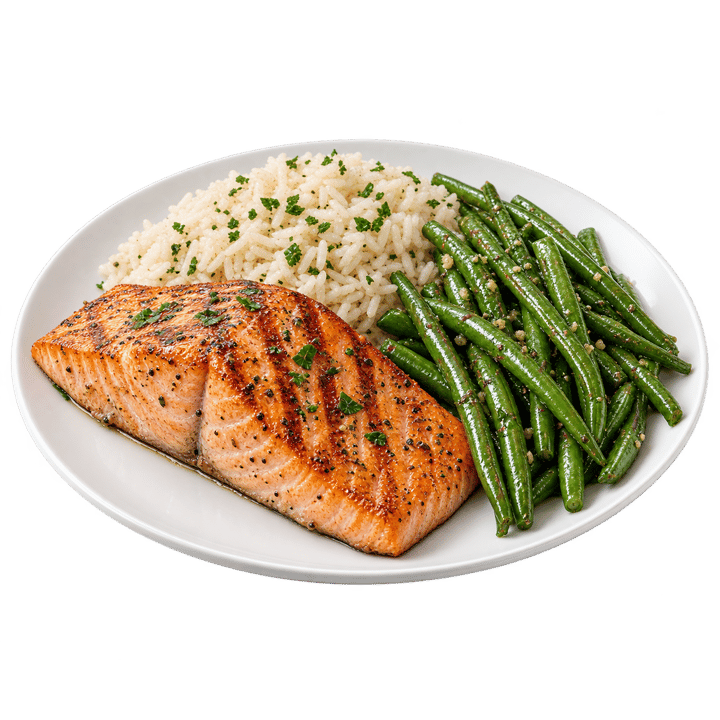
Your day’s calories divided by your meals, give or take a quarter. On 2,000 calories a day over three meals that’s about 670 a plate, so anything from 500 to 830 is a normal size. The plate size calculator works out yours.
You’ll find a single number for this all over the internet, usually 400 to 600 calories. That’s fine for some people and far off for others. A 5 foot 2 woman who sits most of the day might need 1,600 calories, and a 6 foot 2 man who lifts might need 2,800. The same 600 calorie lunch is a big plate for one of them and a snack for the other.
We’d work it out from your own day, keep the meals roughly even, and then spend your attention on what’s on the plate. Inside the window, quality decides far more than the last 100 calories.
It’s like splitting a dinner bill. The total comes first, then you divide it by the number of people at the table.
What’s the window for my day?
Each cell is the calorie range for one plate, your day over your meals give or take a quarter.
| Your day | 2 meals | 3 meals | 4 meals |
|---|---|---|---|
| 1,600 | 600 to 1,000 | 400 to 670 | 300 to 500 |
| 2,000 | 750 to 1,250 | 500 to 830 | 380 to 630 |
| 2,400 | 900 to 1,500 | 600 to 1,000 | 450 to 750 |
| 2,800 | 1,050 to 1,750 | 700 to 1,170 | 530 to 880 |
If you snack, take the snacks off the day first. Two 200 calorie snacks on a 2,000 calorie day leave 1,600 for three meals, so each plate is 400 to 670.
Don’t know your day? tdee.guide works it out from your size, age and steps.
Why a window and not one number?
Real meals aren’t identical, and they don’t need to be. In a 2022 trial, 30 adults with overweight or obesity spent four weeks eating most of their calories early (45% at breakfast, 20% at dinner) and four weeks eating them late (20% at breakfast, 45% at dinner), with the same total. They lost the same weight both ways. On the big-breakfast weeks they felt less hungry.
A plate a quarter over or under your middle number is normal. Size is the first of the six jobs a meal does, and our meal checker scores it on its Energy meter. It gives full marks anywhere in the window, takes a few points off a light plate and more off a big one, and only fails a plate that’s over the window or under half your middle number.
How does this compare with eating out?
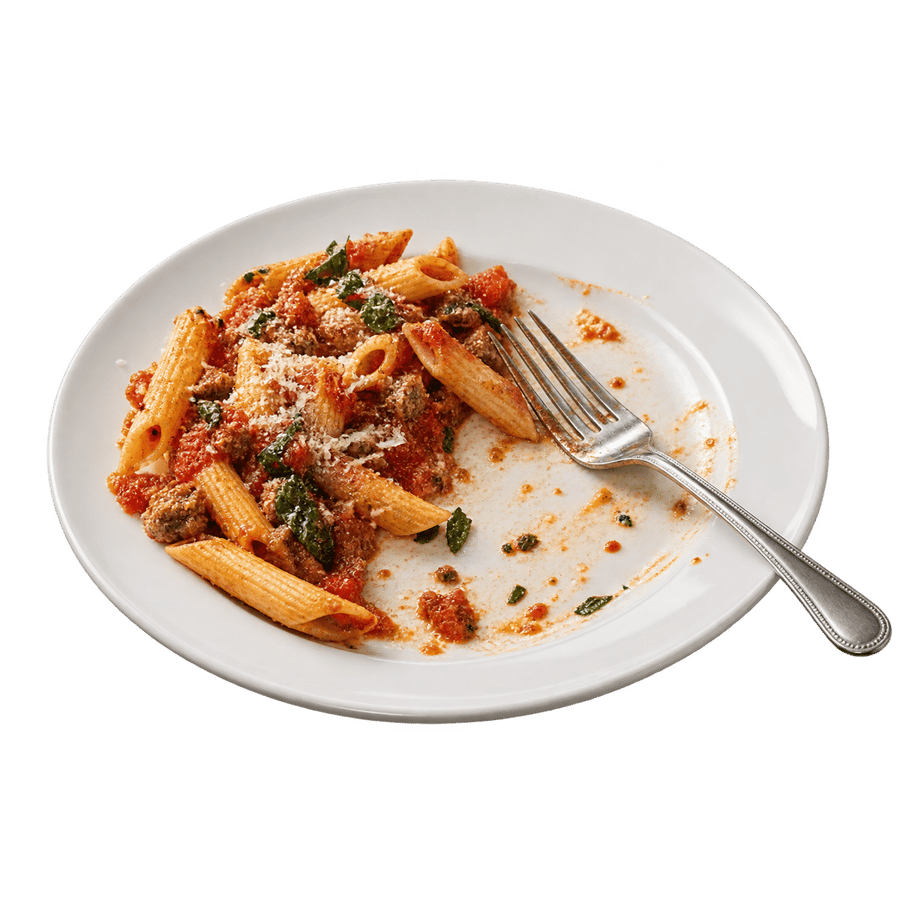
Restaurant meals run well over most windows. Tufts researchers measured 364 of the most ordered meals at 123 non-chain restaurants and found they averaged about 1,200 calories. That’s 60% of a 2,000 calorie day in one sitting, and about one and a half times the top of a typical plate window. The is this a lot calculator shows what any calorie number is as a share of your day.
What to do
- Get your day from tdee.guide, then divide by your meals.
- Aim for the middle and don’t sweat a quarter either way.
- Put the effort into the plate: a palm of protein, a fist or two of plants, then the starch and fat to fill the window.
3 sources
- Urban et al., Energy contents of frequently ordered restaurant meals and comparison with human energy requirements and US Department of Agriculture database information: a multisite randomized study, Journal of the Academy of Nutrition and Dietetics, 2016pmc.ncbi.nlm.nih.gov
- Ruddick-Collins et al., Timing of daily calorie loading affects appetite and hunger responses without changes in energy metabolism in healthy subjects with obesity, Cell Metabolism, 2022doi.org
- US Department of Agriculture and US Department of Health and Human Services, Dietary Guidelines for Americans, 2025 to 2030, January 2026cdn.realfood.gov