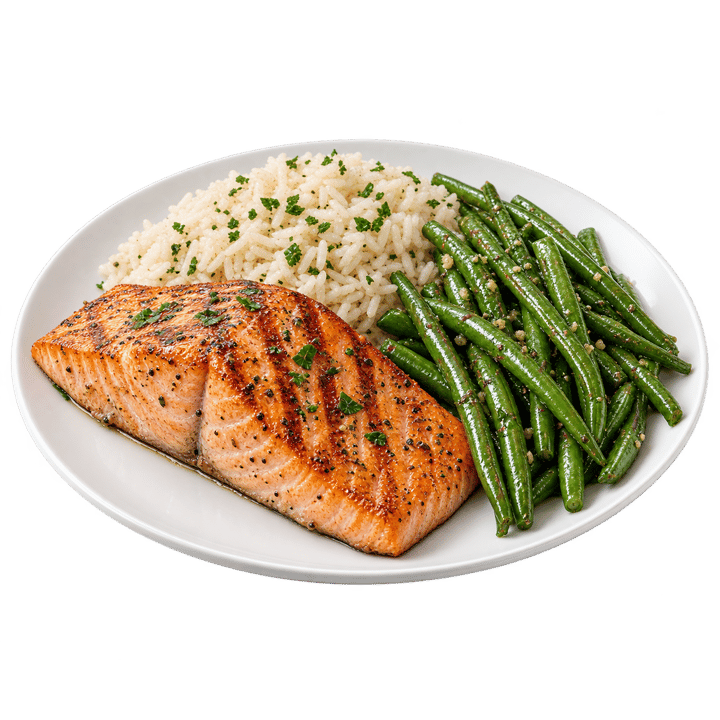
Does eating vegetables first lower blood sugar?
On this page
In people with type 2 diabetes, it does. In a 2015 trial, 11 adults ate the same 628 calorie meal on two mornings a week apart. When the bread and orange juice came 15 minutes after the chicken and vegetables, blood sugar an hour later was 37% lower than when the bread came first. The trials are small, but it costs nothing to try.
Most advice about blood sugar is about what you eat. This is about the order, which sounds too simple to work. Same food, same calories, same plate, and the only change is which part goes in your mouth first.
The 2015 trial was a pilot. The 11 adults all had type 2 diabetes and took metformin. Breakfast was ciabatta bread and orange juice, grilled chicken breast, a lettuce and tomato salad, and steamed broccoli with butter. One morning they ate the bread and juice first and the rest 15 minutes later. The next week they did it the other way around.
| Minutes after eating | Bread and juice first | Bread and juice last | Difference |
|---|---|---|---|
| 0 | 107 mg/dL | 107 mg/dL | None |
| 30 | 157 | 112 | 29% lower |
| 60 | 199 | 126 | 37% lower |
| 120 | 169 | 141 | 17% lower |
The total rise over two hours was 73% smaller with the carbs last, and insulin was lower too.
We’d eat the vegetables and protein first and the bread, rice or potatoes last. The six meters on our meal checker don’t score it, because it doesn’t change what’s on the plate, and we’d still do it at any meal where it’s easy. It’s one more thing you can do for the Glucose job on top of the plate itself.
It works like merging into traffic. The same cars get through, but spaced out instead of all at once.
Was it repeated?
The same group ran a bigger version in 2017 with 16 adults with type 2 diabetes. They ate the same meal three ways on different days: carbs first, carbs last, or everything mixed. With the carbs last, the rise in blood sugar was about 53% smaller and the peak 54% lower than carbs first. It was still about 40 to 44% lower than eating everything mixed together.
Insulin was lower with the carbs last, and GLP-1, the gut hormone that GLP-1 drugs copy, was higher. The authors said the exact reason still needs more study.
What it doesn’t tell us
These were single meals in small groups of people with type 2 diabetes, measured for two hours. Nobody has shown yet whether eating this way for months lowers A1c, or how big the effect is in people without diabetes. The food and calories were the same both times, and only the shape of the curve changed.
If you take insulin or a medicine that can cause low blood sugar, ask your care team before changing how you eat.
Try it
The vegetables first calculator shows the trial’s curves for the same meal eaten both ways.
2 sources
- Shukla et al., Food order has a significant impact on postprandial glucose and insulin levels, Diabetes Care, 2015pmc.ncbi.nlm.nih.gov
- Shukla et al., Carbohydrate-last meal pattern lowers postprandial glucose and insulin excursions in type 2 diabetes, BMJ Open Diabetes Research and Care, 2017europepmc.org