What should I order when I eat out?
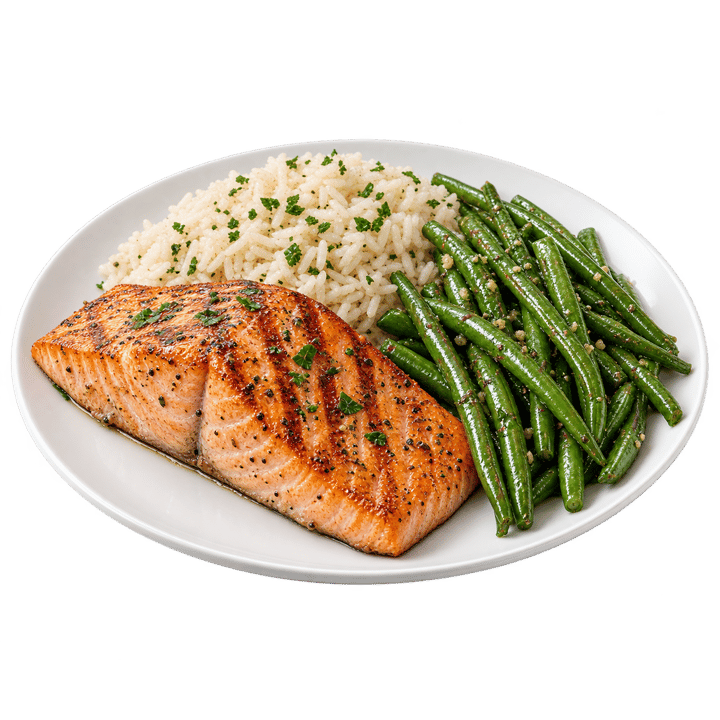
Order by five rules: a protein you can see, a vegetable side, water to drink, the sauce on the side, and box half of a big plate. Restaurant meals averaged about 1,200 calories in a Tufts study of 364 popular dishes, so boxing half does a lot of the work on its own.
Most people order by the words on the menu. “Salad,” “wrap,” “bowl” and “grilled” sound healthy, and “fried,” “loaded” and “smothered” don’t. The words help a little, but they miss the two things that decide most restaurant meals: how big the plate is and what’s in the drink and the sauce.
Restaurant plates are big. In 2016, Tufts researchers bought 364 of the most often ordered meals at 123 non-chain restaurants in Boston, San Francisco and Little Rock and measured the calories in a lab. The average was 1,205, and 92% had more than 570 calories, which the researchers used as a typical woman’s needs at one lunch or dinner.
We’d order the plate we’d build at home, then take half of it home. A restaurant dinner is often two meals served on one plate.
The five rules
| Rule | Why | What it does |
|---|---|---|
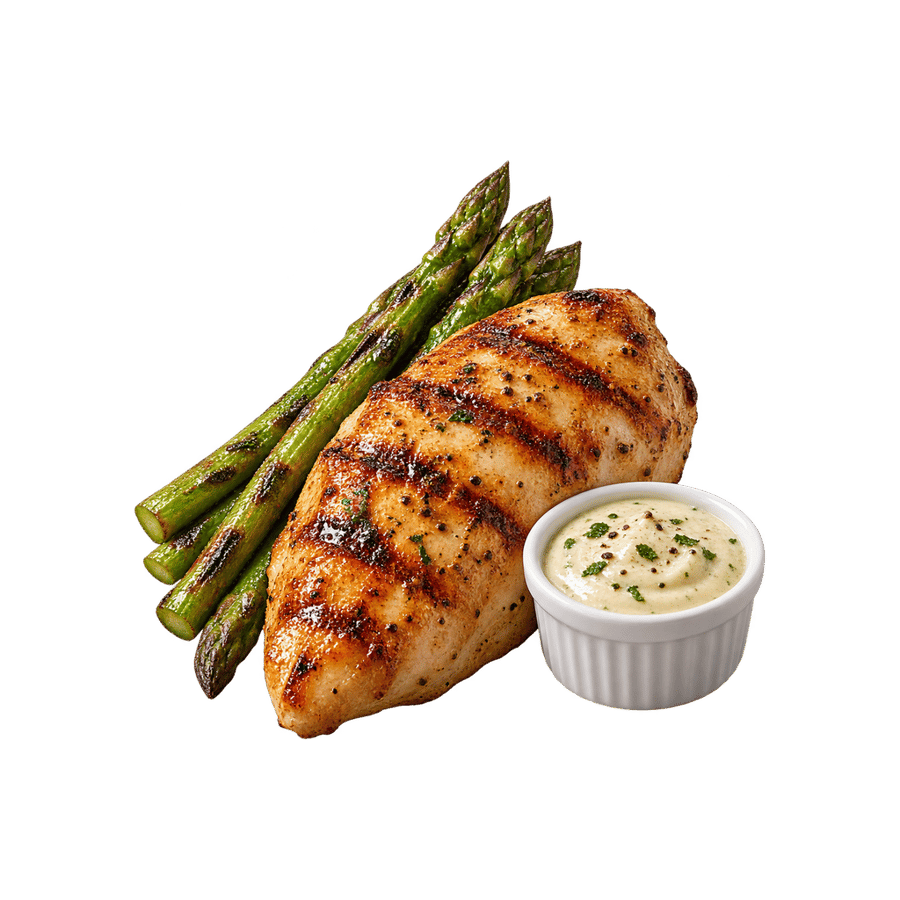
| A protein you can see | A piece of chicken, fish, steak, tofu or eggs, grilled, roasted or broiled | Gets you to about 30 g. The 2025 to 2030 US guidelines say to swap deep-fried for “baked, broiled, roasted, stir-fried, or grilled” |
| A vegetable side | A side salad, steamed or roasted vegetables, beans or a baked potato instead of fries | Brings the plants and fiber that restaurant plates usually lack |
| Water | Or unsweetened tea, or sparkling water | A 12 oz soda is about 37 g of sugar, nearly four meals’ worth |
| Sauce on the side | Dressing, mayo, aioli, gravy and creamy sauces | Two tablespoons of ranch is about 130 calories, and you decide how much goes on |
| Box half | Ask for a box when the food arrives | Takes a 1,200 calorie plate down to about 600 |
What does that look like?
In our meal checker, a cheeseburger, small fries and a 12 oz soda grades D, and it clears only one of the six jobs a meal does. Swap the soda for water and it’s a C. A grilled chicken breast with a buttered baked potato and a side salad grades A, with about 34 g of protein and no added sugar.
The guidelines say “when dining out, choose nutrient-dense options.” The five rules are how we’d do that at the counter.
What about chain restaurants?
The Tufts team checked that too. On a subset of meals, chain and non-chain restaurant dinners came out about the same, about 1,320 and 1,390 calories, so the five rules work the same at both.
What to do
- Pick the protein first, then the side.
- Order water before you look at the menu.
- Ask for the box with the food.
- Check the size of any menu number with the is this a lot calculator.
4 sources
- Urban et al., Energy contents of frequently ordered restaurant meals and comparison with human energy requirements and US Department of Agriculture database information: a multisite randomized study, Journal of the Academy of Nutrition and Dietetics, 2016pmc.ncbi.nlm.nih.gov
- US Department of Agriculture and US Department of Health and Human Services, Dietary Guidelines for Americans, 2025 to 2030, January 2026cdn.realfood.gov
- Gebhardt and Thomas, Nutritive Value of Foods, Home and Garden Bulletin 72, USDA Agricultural Research Service, 2002ars.usda.gov
- USDA National Nutrient Database, Salad dressing, ranch dressing, regular, via nutritionvalue.orgnutritionvalue.org